Introduction: Understanding the 2026 Middle East Crisis
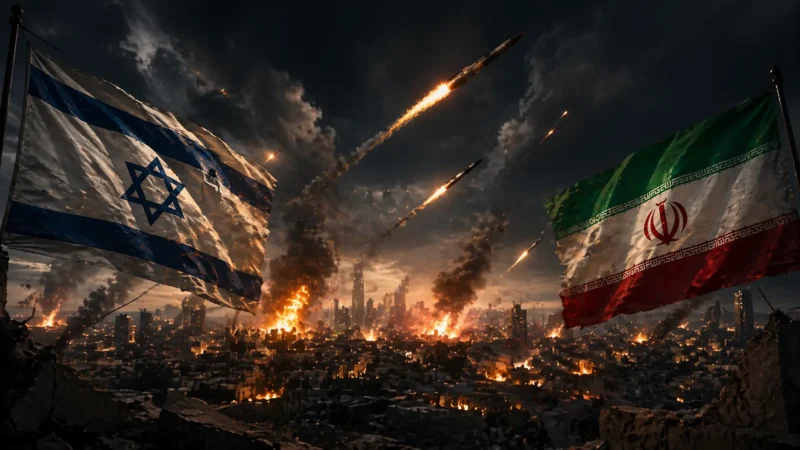
The Israel Iran war in May 2026 represents one of the most significant geopolitical events of the decade. What started as diplomatic tensions in early 2026 has escalated into a full-scale military conflict with ramifications that extend far beyond the Middle East. This comprehensive guide examines every critical aspect of the Israel Iran war, its causes, current status, and the far-reaching consequences affecting global markets, energy supplies, and international stability.
The Road to War: How We Got Here
The Escalation Timeline Leading to February 2026
The Israel Iran war didn’t begin suddenly. Rather, it represents the culmination of years of mounting tensions, failed negotiations, and military provocations. Understanding this timeline is essential to grasping why the conflict erupted so suddenly in February 2026.
The Middle Eastern crisis formally began in 2023, when initial tensions between Iran and Israel first manifested in direct military exchanges. These initial skirmishes were relatively contained, but they set the stage for what would follow.
In 2024, Iran and Israel again exchanged missile strikes, marking an escalation from the 2023 incidents. These weren’t isolated incidents—they represented a growing pattern of military confrontation between the two regional powers. The international community watched closely, hoping diplomatic channels could prevent further escalation.
The Twelve-Day War in June 2025 represented another significant escalation. This conflict resulted in a US airstrike on Iranian nuclear sites, demonstrating increased American involvement in what had previously been regional tensions. This action proved consequential, as it undermined Iran’s defensive capabilities and brought nuclear weapons concerns to the forefront of international discourse.
The Immediate Trigger: Failed Nuclear Negotiations
By February 2026, nuclear negotiations had become the focal point of international diplomacy. The world watched as indirect talks mediated by Oman’s foreign minister progressed. Initial reports suggested significant progress, with Iran reportedly willing to make concessions.
However, President Trump expressed dissatisfaction with the negotiations, stating he was “not thrilled” with the talks. This statement proved to be more than casual criticism—it signaled the US administration’s decision to pursue a military solution rather than continue diplomatic efforts.
Simultaneously, Iran faced internal instability. January 2026 witnessed extensive Iranian protests—the largest since 1979—driven by economic weakness and infrastructure challenges. These domestic protests, brutally suppressed by Iranian security forces, weakened the government’s legitimacy at precisely the moment military confrontation seemed inevitable.
Read More:- US Iran Peace Talks 2026: Is the World Finally Moving Toward Stability?
The Military Conflict: What Happened and When
February 28, 2026: The Opening Strike
On February 28, 2026, Israel and the United States launched simultaneous military operations against Iran with the stated objectives of destroying Iran’s military capabilities, preventing nuclear weapons development, and inducing regime change. These operations, known as Operations Roaring Lion and Epic Fury, represented the largest aerial attack ever conducted by the Israeli Air Force.
The initial strike demonstrated unprecedented coordination and deception. Israeli military leadership later revealed that months of strategic and operational deception involving satellite imagery had preceded the attack. Military facilities and planes were positioned to appear less threatening through careful operational security measures.
The most significant casualty of these initial strikes was Supreme Leader Ali Khamenei, who was killed in a strike on a Tehran bunker on February 28, 2026. Iran’s defense minister and several Islamic Revolutionary Guard Corps (IRGC) generals were also killed in the assault.
Iran’s Retaliation and Regional Expansion
Iran responded to these strikes with a coordinated campaign of hundreds of drones and ballistic missiles targeting Israel, US military bases throughout the Middle East, and US-allied Arab countries. The retaliation extended across the region, affecting Bahrain, Jordan, Kuwait, Qatar, Saudi Arabia, and the United Arab Emirates.
The conflict rapidly expanded beyond a direct Iran-Israel confrontation. The existing tensions between Hezbollah and Israel escalated significantly, evolving into the 2026 Lebanon war. This secondary conflict has caused significant casualties, with more than 2,000 civilians and militants killed in Lebanon alone.
Additionally, regional allies became involved unexpectedly. A drone struck Britain’s Akrotiri military base on Cyprus, missiles were shot down over Turkish airspace, and civilian infrastructure suffered damage in Oman and Azerbaijan. This geographic expansion demonstrated the war’s capacity to involve nations far beyond the primary belligerents.
The Strait of Hormuz: Why Global Oil Supply Is Threatened
Understanding the Strategic Importance
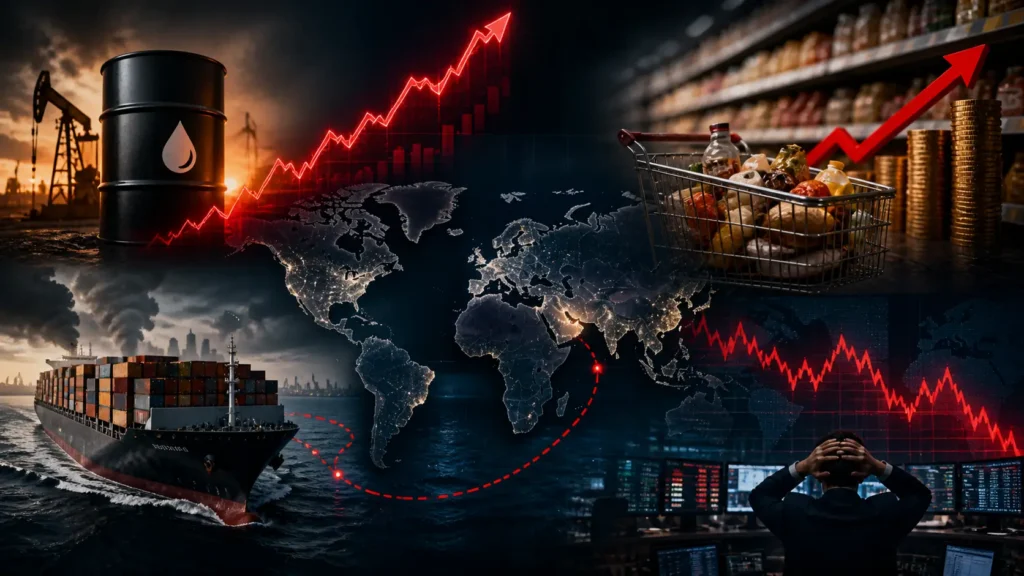
The Strait of Hormuz represents one of the world’s most critical chokepoints for global trade. Approximately 20% of the world’s petroleum and 20% of liquified natural gas pass through this narrow waterway annually. Before the 2026 conflict, roughly 3,000 vessels transited the strait monthly.
Following the initial strikes, Iran declared it would block vessels from “hostile” nations and their allies. Shipping has dropped to approximately 5% of pre-conflict levels, with the strait remaining effectively closed.
Economic Consequences of the Blockade
This blockade carries enormous economic significance. Global oil prices have spiked dramatically, with the average US gasoline price reaching $4.30 per gallon by May 2026. These price increases cascade through entire economies, affecting transportation costs, food prices, and consumer goods expenses.
Several Arab states were forced to cut or suspend oil production due to Iranian military strikes against their infrastructure. This reduction in global supply, combined with shipping disruptions, creates a perfect storm for energy price volatility.
The US has responded with a counter-blockade, targeting all ships seeking to reach Iranian ports. In March 2026, the US temporarily removed sanctions on some Russian oil and Iranian oil already in transit to reduce global energy prices. The International Energy Agency released 400 million barrels of strategic reserves in April to further stabilize markets.
The Humanitarian Dimension
Beyond economic calculations, the Strait of Hormuz blockade carries humanitarian implications. Much of Iran’s grain imports traverse this vital waterway. Shipping disruptions have created serious concerns about food supply delays and grain scarcity within Iran.
The United Nations Development Programme reported that military escalation is affecting employment and livelihoods in Iran through disruptions to economic activity, mobility, and supply chains. For a nation of 90 million people, these disruptions create food insecurity risks that could affect vulnerable populations severely.
The Nuclear Question: Why It Remains Unresolved
Iran’s Nuclear Capabilities and Strategy
The nuclear dimension of the Israel Iran war remains central to the conflict despite two months of fighting. Iran has explicitly rejected international nuclear safeguards, informing the IAEA that normal safeguards were “legally untenable and materially impracticable” due to what Iran characterizes as threats and acts of aggression.
Analysts describe Iran’s strategy as “nuclear hedging”—developing technical infrastructure capable of assembling nuclear weapons on short notice while stopping short of actual weapons production. This approach maintains ambiguity about Iranian intentions while preserving capability for rapid escalation if deemed necessary.
The Negotiation Stalemate
Current negotiations remain deadlocked over fundamental disagreements about Iran’s nuclear future. The US and Israel demand that Iran forfeit its supply of near bomb-grade uranium and cease enrichment activities entirely. Iran categorically refuses these demands, viewing uranium enrichment as a sovereign right and legitimate energy source.
A staged approach to negotiations has been proposed, where initial discussions would focus on reopening the Strait of Hormuz, with nuclear issues deferred to later negotiating phases. This framework reflects the practical reality that neither side will quickly resolve nuclear disagreements.
Global Economic Impact: Beyond the Middle East conflict 2026
Energy Market Volatility
The US Israel Iran war has fundamentally altered global energy markets. Oil prices remain elevated, energy security concerns dominate policy discussions, and consumers worldwide experience the consequences at gas pumps and in their utility bills.
Renewable energy investments have accelerated as nations seek alternatives to Middle Eastern oil dependence. However, the transition to renewable energy occurs over years and decades, leaving the world dependent on volatile oil markets in the immediate term.
Supply Chain Disruptions
Global supply chains have experienced significant disruptions beyond energy. Shipping disruptions affect everything from electronics to consumer goods. Companies previously optimized for just-in-time delivery have accelerated supply chain diversification efforts.
The conflict has increased transportation costs, delayed shipments, and created inventory challenges for multinational companies. Businesses dependent on timely deliveries have faced production delays and increased expenses.
Currency and Financial Market Effects
Currency markets have experienced volatility as investors reassess geopolitical risks. The strengthening US dollar reflects traditional “safe haven” flows during geopolitical crises. Financial markets have incorporated increased risk premiums, affecting borrowing costs and investment returns.
Military Dimensions: The Multi-Front Challenge
Israel’s Expanding Military Operations
Israeli military leadership has emphasized that Israel remains engaged in a multi-front operation. Forces are active in Gaza, Syria, and Lebanon simultaneously, creating unprecedented operational complexity. Israeli leadership indicates that forces may occupy these territories for extended periods to ensure security objectives.
The Lebanon Conflict: A War Within a War
The conflict between Hezbollah and Israel has evolved into a significant secondary conflict. The 2026 Lebanon war has generated substantial casualties and displaced civilian populations. Communities in Lebanon reportedly experience “deep fear and uncertainty” as Israeli military strikes continue.
This expansion demonstrates how the Israel Iran war has transcended a direct bilateral conflict to become a regional conflagration involving multiple belligerents and geographic locations.
The Ceasefire: What It Actually Means
Understanding the April 8 Ceasefire
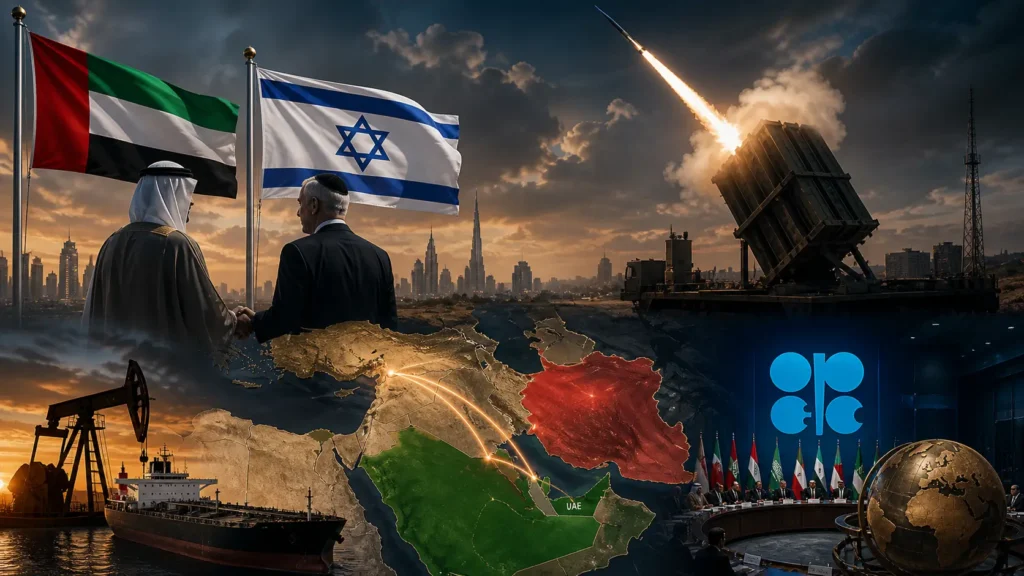
A conditional ceasefire was declared on April 8, 2026, after initial weeks of intense military operations. However, this ceasefire doesn’t mean fighting has stopped—rather, it has limited the intensity and scope of operations.
Israeli leadership maintains that military operations continue under the ceasefire framework, stating that operations against emerging threats and immediate security concerns are permissible. This interpretation renders the ceasefire ambiguous rather than definitive.
Diplomatic Progress and Stalemate
Pakistan-mediated talks represent the primary diplomatic channel. Sources indicate the two sides are not as far apart as public rhetoric suggests, with discussions centered on reopening the Strait of Hormuz without restrictions or tolls as an initial step.
However, fundamental disagreements about Iran’s nuclear future, Israeli security demands, and Iranian sovereignty concerns continue to obstruct comprehensive peace agreements.
What Experts Predict: Future Scenarios for the Israel Iran War
Scenario One: Negotiated Settlement (Probability: 25%)
A breakthrough in negotiations could see both sides make painful concessions. Iran might agree to restrictions on uranium enrichment while maintaining a civilian nuclear program. The US might provide sanctions relief and security guarantees. The Strait of Hormuz would reopen, oil prices would decline, and regional stability would gradually improve.
This scenario requires both sides abandoning maximalist positions in favor of pragmatic compromise.
Scenario Two: Frozen Conflict (Probability: 50%)
Most experts predict a frozen conflict—a no-war, no-peace situation where the ceasefire holds but progress stalls. Periodic small-scale escalations would occur, the Strait would remain partially closed, and global oil markets would experience continued volatility.
This scenario perpetuates the status quo while avoiding full-scale military renewal, but creates sustained economic hardship for involved parties and global markets.
Scenario Three: Renewed Full-Scale Conflict (Probability: 25%)
Failed negotiations could trigger renewed military operations. Trump administration officials have threatened extensive strikes on Iranian infrastructure if shipping does not resume through the Strait of Hormuz. Iran could respond with coordinated attacks on US bases throughout the Middle East, dragging additional regional players into escalating violence.
This scenario carries the risk of global economic disruption and potential nuclear escalation.
The Broader Geopolitical Implications
Regional Power Dynamics
The Israel Iran war has fundamentally altered regional power balances. Iran’s regional allies have been significantly weakened by Israeli military action since 2023. The conflict has potentially isolated Iran further despite its military resilience.
Arab Gulf states, previously working toward improved relations with Iran, now find themselves caught between American military leadership and Iranian military capabilities. This positioning creates strategic uncertainty and hinders regional cooperation.
Great Power Competition
The conflict has drawn attention from Russia, China, and other global powers. Russia has expressed support for Iran and conducted diplomatic engagement. China monitors the situation carefully, concerned about energy supply implications and potential for broader conflict escalation.
How the Israel Iran War Affects Your Daily Life
Energy Costs
Elevated gasoline prices directly affect transportation costs, food delivery expenses, and consumer goods pricing. Utility bills may increase as electricity generation depends partially on petroleum-based power plants.
Investment Returns
Portfolio volatility has increased, affecting retirement savings and investment returns. Energy stocks have benefited from elevated prices, while sectors dependent on stable energy costs have faced margin pressures.
Employment Opportunities
Military spending has increased, creating employment in defense sectors. Conversely, sectors dependent on stable supply chains and moderate energy costs have faced hiring challenges.
Food Security
Global food prices are affected by transportation costs influenced by elevated petroleum prices. Developing nations dependent on grain imports face particular challenges.
FAQs
When will the Israel Iran war end?
No clear end date exists. Current projections suggest either a frozen conflict continuing through 2026 or renewed escalation. Negotiations continue but lack momentum toward comprehensive settlement.
How does the Israel Iran war affect cryptocurrency?
Sanctioned parties increasingly use cryptocurrency to circumvent financial restrictions. Bitcoin and other digital currencies offer transaction capabilities despite formal sanctions.
Conclusion: A Conflict Reshaping the World
The Israel Iran war in May 2026 represents far more than a regional conflict. It demonstrates how geopolitical tensions in one region reverberate globally, affecting energy markets, investment returns, food security, and human welfare worldwide.
