Nipah Virus 2026 India’s Dangerous Outbreak Explained — What You Must Know
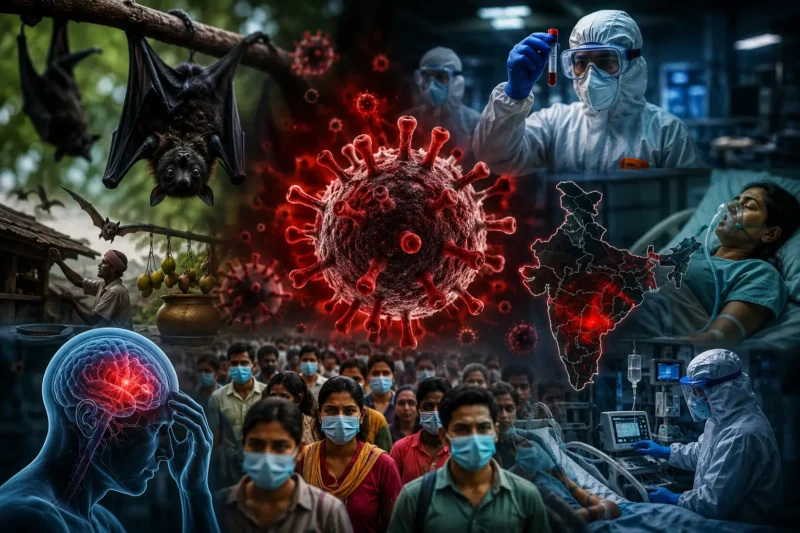
Nipah Virus 2026 is back in the headlines — and this time, it’s closer to home than ever. In January 2026, India confirmed two fresh cases of Nipah virus infection in West Bengal’s Barasat, North 24 Parganas district, sending shockwaves through the country’s public health system. With no approved vaccine, a fatality rate of up to 75%, and the virus already endemic in both Kerala and West Bengal, it is vital that every Indian understands what Nipah virus is, how it spreads, and what precautions to take.
What Is Nipah Virus? A Deadly Zoonotic Disease
Nipah virus Spread highly infectious zoonotic pathogen — meaning it jumps from animals to humans. It was first identified in 1998 during a large outbreak among pig farmers in Malaysia. Since then, it has caused recurring outbreaks across South Asia, particularly in India and Bangladesh.
The natural reservoir of Nipah virus is fruit bats (also called flying foxes) from the Pteropodidae family. These bats are widely found across Asia and Australia and can silently carry the virus without showing any Nipah Virus Symptoms themselves.
Read More:- Shocking! Sushmita Dev Meets Himanta Biswa Sarma — Is She About to Join BJP After Leaving TMC in 2026?
Nipah Virus 2026: What Happened in India?
The 2026 outbreak began in West Bengal, India’s most vulnerable zone for Nipah after Kerala. Here’s what we know:
- Two confirmed cases were reported in healthcare workers at a private hospital in Barasat, West Bengal
- A 55-year-old woman believed to be the probable primary case had consumed raw date palm sap from a local vendor
- Both infected patients were nurses aged between 20–30 years
- Laboratory confirmation was provided by the National Institute of Virology (NIV), Pune on January 13, 2026
- India’s health authorities placed nearly 100+ contacts under home quarantine and traced over 190 individuals
- This was the third Nipah outbreak in West Bengal — after Siliguri (2001) and Nadia (2007)
Senior Indian health officials have confirmed that both Kerala and West Bengal are now considered endemic to the Nipah virus.
How Does Nipah Virus Spread? Know the 3 Key Routes
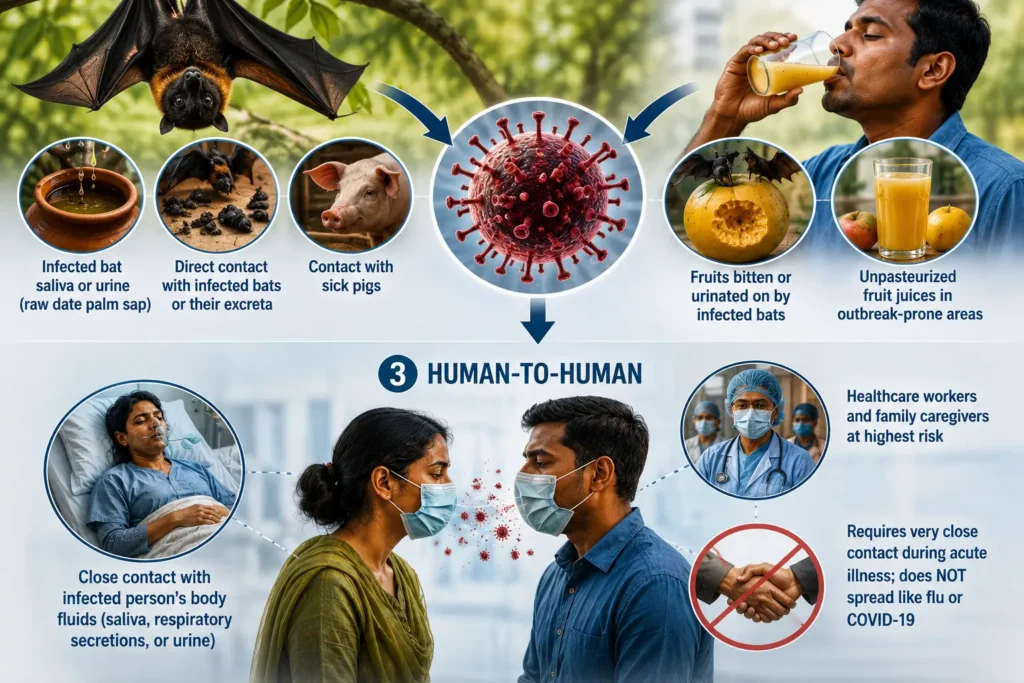
Understanding transmission is your first line of defence. Nipah spreads through:
1. Animal-to-Human Transmission
- Consuming raw date palm sap contaminated by infected bat saliva or urine — the most common route in India and Bangladesh
- Direct contact with infected bats or their excreta
- Contact with sick pigs (seen in the 1998–1999 Malaysia outbreak)
2. Contaminated Food
- Fruits bitten or urinated on by infected bats
- Unpasteurized fruit juices in outbreak-prone areas
3. Human-to-Human Transmission
- Close contact with an infected person’s bodily fluids — saliva, respiratory secretions, or urine
- Healthcare workers and family caregivers are at highest risk
- Transmission requires very close contact during acute illness and does NOT spread as easily as flu or COVID-19
Nipah Virus Symptoms: Recognize the Warning Signs Early
The incubation period — time between exposure and symptoms — is typically 4 to 14 days, though it can stretch to 45 days in rare cases. Early Nipah Virus Symptoms can look like common flu, which makes early diagnosis extremely challenging.
Early Symptoms (Days 1–3):
- High fever
- Severe headache
- Muscle pain (myalgia)
- Nausea and vomiting
- Dizziness and fatigue
Advanced Symptoms (Days 3–7):
- Difficulty breathing / rapid breathing
- Disorientation and confusion
- Neurological decline
Severe Stage:
- Acute encephalitis (brain inflammation)
- Seizures and convulsions
- Coma — within 24 to 48 hours in the worst cases
- Death
Nipah Virus Fatality Rate: More Dangerous Than Ebola?
This is a question many are asking in 2026 — and the numbers are alarming.
| Virus | Average Fatality Rate |
|---|---|
| COVID-19 (unvaccinated) | ~1–3% |
| Seasonal Flu | ~0.1% |
| Ebola | ~50% |
| Nipah Virus | 40% to 75% |
The case fatality ratio (CFR) for Nipah ranges from 40% to 75%, depending on the quality of early detection and clinical management. In the 2001 Siliguri, West Bengal outbreak alone, the fatality rate was 68.18% with 66 cases — and about 75% of infections were in healthcare workers and hospital visitors.
In terms of raw lethality, Nipah can be as dangerous as or worse than Ebola in outbreak conditions — though Nipah does not spread as rapidly.
Is There a Vaccine or Treatment for Nipah Virus?

Here is the most critical fact you must know: There is currently no approved vaccine or antiviral treatment for Nipah virus infection in humans.
- Treatment is supportive — doctors manage symptoms, prevent complications, and provide intensive care
- The antiviral drug Ribavirin has been used in some cases to reduce severity
- Monoclonal antibody candidates are in development; India has prioritised securing global stocks
- WHO has listed Nipah as a priority pathogen under its R&D Blueprint for Epidemics
- Several vaccine candidates are in clinical trials but are not yet available for public use
Early diagnosis and high-quality supportive care remain the best tools available to improve survival chances.
Should India (and the World) Be Worried? WHO’s Assessment
The WHO has assessed the global risk of Nipah as LOW, while classifying the sub-national risk in West Bengal as moderate.
Key reasons why the global risk remains contained:
- Human-to-human transmission requires very close physical contact
- All 190+ contacts traced in the 2026 West Bengal outbreak tested negative for the virus
- No cases have spread outside India
- Sporadic Nipah infections occur almost every year in India and Bangladesh — this is not a new phenomenon
The Global Virus Network (GVN) confirmed: “The risk of regional or global spread of Nipah virus is very low. Similar outbreaks have occurred repeatedly in India and Bangladesh, driven largely by specific cultural and environmental factors.”
However, experts warn that without sustained investment in vaccines and antivirals, a more dangerous mutation or super-spreader event cannot be ruled out in the future.
How to Protect Yourself: Nipah Prevention Tips for Indians
Especially if you live in or travel to Kerala, West Bengal, or Bangladesh border areas, follow these precautions:
- Avoid raw date palm sap — do not drink it unboiled, especially between December and April
- Do not consume fruits with bite marks or signs of animal contact
- Wear PPE if caring for a suspected Nipah patient
- Wash hands thoroughly after contact with animals
- Seek immediate medical care if you develop fever + neurological symptoms after possible exposure
- Follow government advisories — especially during confirmed outbreak periods
- Do not spread unverified information on social media — misinformation during outbreaks costs lives
Conclusion: Stay Informed, Stay Safe
Nipah Virus 2026 is a serious but manageable public health threat — provided we act with awareness and caution. India has shown it can contain Nipah outbreaks through swift contact tracing, strong surveillance (especially in Kerala), and timely medical response.
Read More:- West Bengal Cabinet Expansion June 1 2026: 35 MLAs Sworn In — 5 Powerful Shifts That Will Shock You
