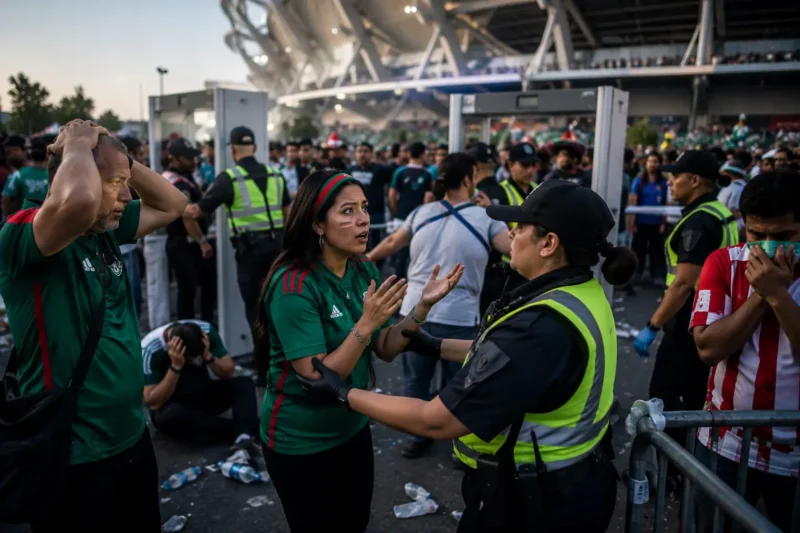
FIFA World Cup 2026 Fan Safety Issues
FIFA World Cup 2026 fan safety issues USA Mexico Canada have become a global conversation — and if you’re planning to attend, there are 7 shocking concerns you simply cannot ignore.
The 2026 FIFA World Cup is historic — 48 teams, 104 matches, 3 host nations, and more than a million international fans expected to travel across North America between June 11 and July 19, 2026. But behind the excitement, a storm of serious warnings is brewing: heat stress threatening players’ lives, star players sidelined by injuries before the tournament even begins, exorbitant ticket prices locking out ordinary fans, and a transit infrastructure crisis that has left Scotland fans booking school buses.
This guide breaks down every critical FIFA World Cup 2026 fan safety issue you need to know — backed by the latest research, data, and expert warnings — so you can plan smarter and stay safer.
48 Teams competing across 3 nations
104 Matches over 39 days
25% Games under dangerous heat conditions
$10K+ Final ticket prices on resale
1. Extreme Heat: The Deadliest FIFA World Cup 2026 Safety Risk
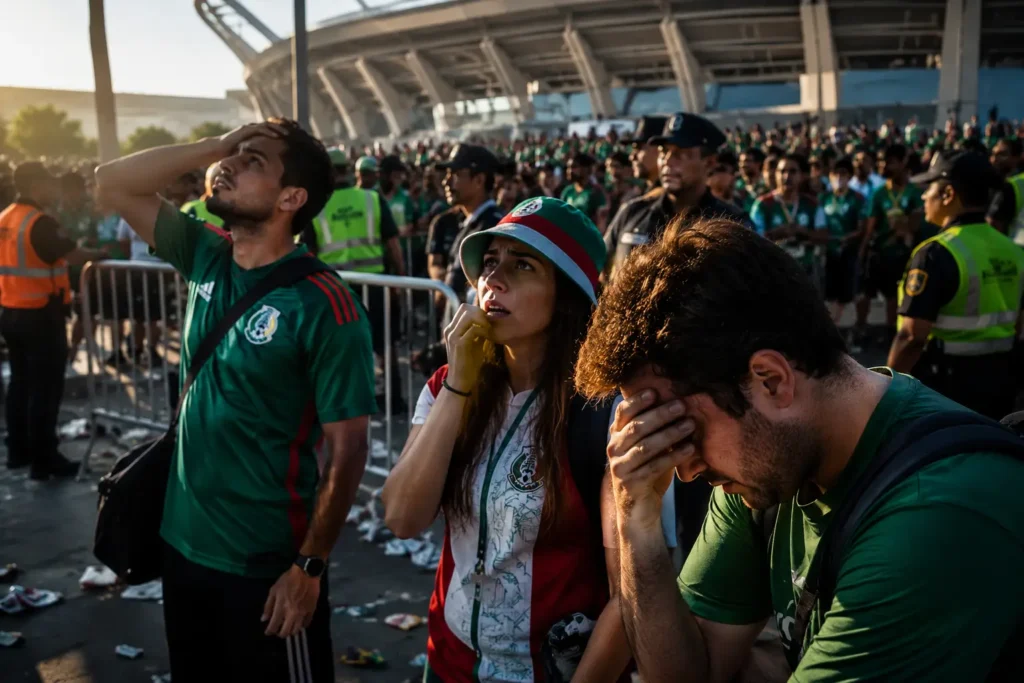
One of the most alarming FIFA World Cup 2026 fan safety issues in USA, Mexico, and Canada is the extreme summer heat. Climate scientists from World Weather Attribution (WWA) have confirmed that a quarter of all 104 World Cup matches are likely to be played under heat conditions dangerous to both players and fans.
Read More:- FIFA World Cup 2026 Complete Schedule Dates India: The Ultimate Unmissable Fan Guide with All Groups & Teams
Professional players across the globe sent an open letter to FIFA warning that heat stress can cause dizziness, fatigue, muscle cramps, and “make it impossible to play with the same intensity.” The letter was signed by players and former players from over 20 countries including Argentina, Belgium, and Australia.
Critical Warning FIFPRO Director Alexander Bielefeld stated that heat conditions “must take priority over commercial interests” — but FIFA has not yet moved any matches or changed kickoff times to reduce player and fan exposure to dangerous temperatures.
Scientists are urging all 16 host cities to invest in hydration stations, cooling zones, and shaded fan parks immediately — but as of May 2026, several cities have yet to confirm these measures are in place.
2. Which Players Are Injured Before World Cup 2026?
Answering which players are injured before World Cup 2026 is heartbreaking for fans. Several of the tournament’s biggest stars will not be on the pitch when the opening whistle blows in Mexico City on June 11. Here is the latest confirmed injury list:
| Player | Country | Injury | Status |
|---|---|---|---|
| Rodrygo | Brazil | Torn ACL + Meniscus | Ruled Out |
| Éder Militão | Brazil | Serious muscle surgery | Ruled Out |
| Estêvão | Brazil | Grade 4 hamstring tear | Ruled Out |
| Hugo Ekitike | France | Achilles tendon rupture | Ruled Out |
| Xavi Simons | Netherlands | Torn ACL (April) | Ruled Out |
| Lamine Yamal | Spain | Hamstring (biceps femoris) | Major Doubt |
| Kylian Mbappé | France | Hamstring | Expected to Play |
| Joško Gvardiol | Croatia | Long-term knee issue | Major Doubt |
| Jack Grealish | England | Season-ending injury | Ruled Out |
| Samu Omorodion | Spain | ACL tear (February) | Ruled Out |
Brazil has been hit hardest — losing Rodrygo, Militão, and Estêvão in one blow. Coach Carlo Ancelotti was forced to recall a 34-year-old Neymar to fill the attacking void, in what may be one of the most unexpected squad decisions of the tournament.
Player Safety Insight The expanded 48-team format places extra physical pressure on all squads. Players must travel longer distances, prepare for more matches, and compete across a 39-day window — increasing the risk of exhaustion and in-tournament injuries significantly.
3. World Cup 2026 Stadium Security Concerns Explained
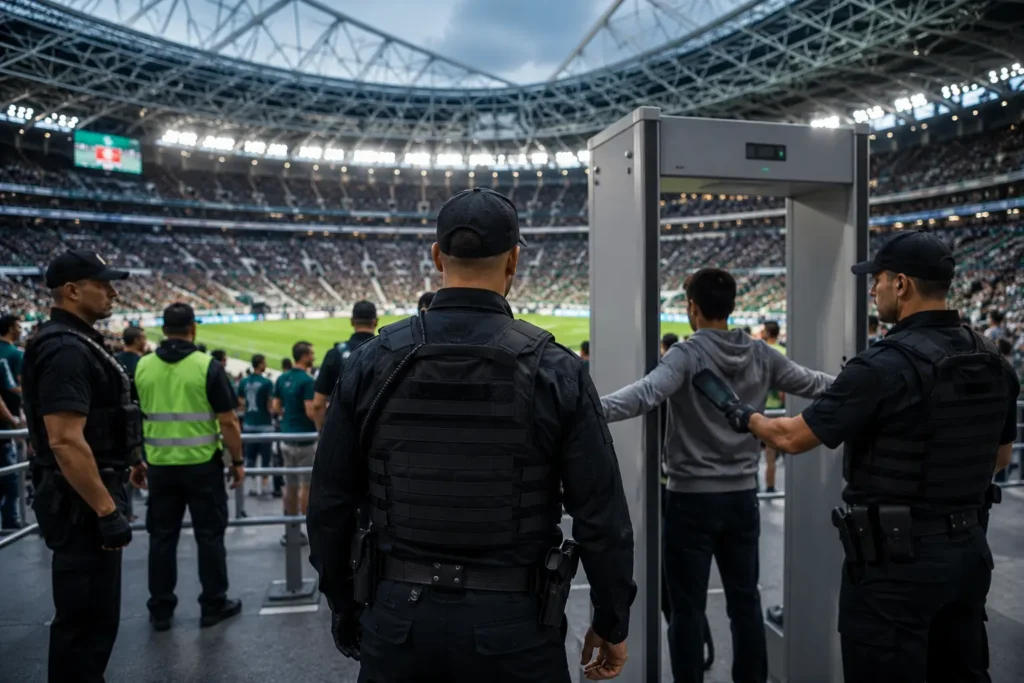
Understanding World Cup 2026 stadium security concerns is essential for every travelling fan. The 2026 tournament is the first in history hosted across three nations simultaneously — and security coordination between the US, Mexico, and Canada is enormously complex.
Iran’s Safety Crisis
In a dramatic development, Iran’s football federation requested FIFA to relocate all Iranian team games from the United States to Mexico, citing “player safety” concerns. The request followed a social media post from President Donald Trump suggesting the Iranian team might not be safe on US soil. This is unprecedented in World Cup history — and as of the tournament’s opening, Iran’s situation remains politically charged.
Amnesty International’s Warning
A 36-page report by Amnesty International titled “Humanity Must Win: Defending rights, tackling repression at the 2026 FIFA World Cup” warned that the tournament carries “serious risks and consequences for fans, players, journalists, workers, and local communities.” The report aimed the majority of its concerns at the United States, which hosts 78 of the 104 matches.
- Drone strike mitigation plans are being developed across all 16 host cities
- Cross-border security coordination between three nations has no historical precedent
- Fan violence incidents from past CONCACAF events on US soil have raised alarm levels
- Human rights concerns around fan expression and protest rights inside US venues
4. FIFA 2026 Accessibility Problems for International Fans
FIFA 2026 accessibility problems for international fans have emerged as one of the loudest criticisms of this tournament. Three major crises are unfolding simultaneously: ticket pricing, transit costs, and discrimination against disabled fans.
Ticket Prices: The Most Expensive World Cup Ever
FIFA’s controversial dynamic pricing model has made the 2026 World Cup the most financially inaccessible in history. Group-stage tickets have exceeded $4,000, while final tickets have surpassed $10,000 on resale platforms. Following intense backlash, FIFA introduced a small number of $60 “upper corner” tickets — but these are extremely limited.
By the Numbers To follow your team from the group stage to the final via official national association allocations costs at least $6,900 — nearly 5 times the equivalent cost at the 2022 Qatar World Cup. Over 68 US Congressmembers wrote to FIFA demanding a pricing review.
Transit Nightmare: America’s Car-Centric Failure
International fans are in shock comparing the 2026 US transit setup to previous World Cups. In Qatar 2022, all stadiums were connected via a modern metro. Russia 2018 and South Africa 2010 both offered free rail travel for ticket holders. In the United States, however:
- New Jersey Transit initially charged $150 (700% surge) for a normally $12.90 train to MetLife Stadium
- Massachusetts MBTA set round-trip fares at $80 for fans attending matches near Boston
- Many US stadiums are only accessible by car, with no pedestrian access from city centers
- Scotland fans, unable to book transport, responded by hiring 20 school buses independently
Disabled Fans Left Behind
In a move described as “completely unprecedented,” FIFA removed wheelchair-accessible tickets from the cheapest Category 4 allocation available to national associations — forcing disabled fans to pay higher-tier prices. At Qatar 2022, accessible tickets were priced at just €10 with a free companion ticket. For 2026, companions are charged full price for the first time in World Cup history, drawing fierce condemnation from disability advocacy groups.
FAQs
Is FIFA World Cup 2026 safe to attend for international fans?
Generally yes, but fan safety issues — including extreme heat, high transit costs, and complex security coordination across three nations — mean fans should research their specific host city carefully before travelling.
Which players are confirmed out of World Cup 2026 due to injury?
Among the confirmed absentees are Brazil’s Rodrygo (ACL), Éder Militão, and Estêvão (hamstring); France’s Hugo Ekitike (Achilles); Netherlands’ Xavi Simons (ACL); and England’s Jack Grealish. Several more remain doubtful.
Final Verdict: Excitement Meets Serious Concern
The 2026 FIFA World Cup is a historic and unmissable event — but fans, players, and football authorities must confront these 7 critical safety and accessibility concerns head-on. From dangerous heat threatening player health to injured stars missing the tournament, from skyrocketing ticket prices to a transit crisis exposing America’s car-dependent infrastructure, this is the most complex World Cup ever staged.
Read More:- US Iran War 2026 Latest Update Today: 5 Shocking Facts Every Indian Must Know Right Now
