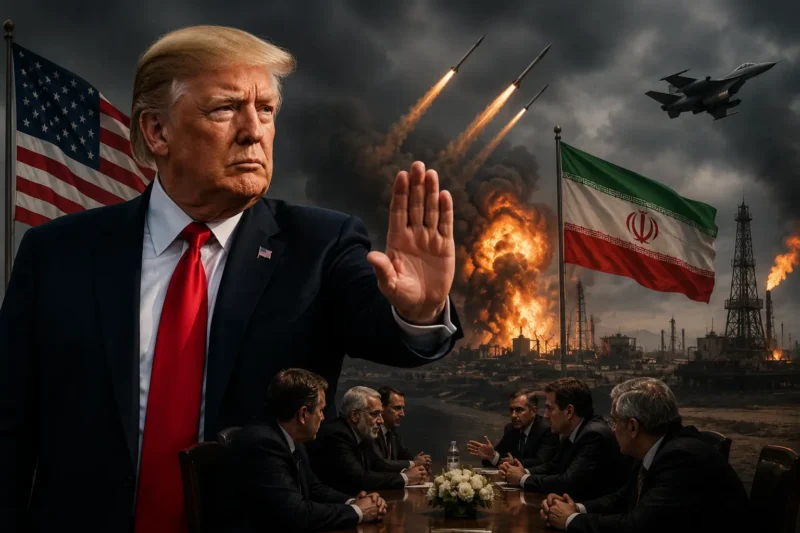
Trump Canceled Iran Strikes
In a stunning reversal that shocked the world, President Donald Trump canceled planned military strikes against Iran on June 11, 2026 — just hours after threatening to hit the Islamic Republic “VERY HARD.” If you’ve been following the Trump cancels Iran strikes 2026 story, you know this is one of the most dramatic foreign policy U-turns in recent American history. But why did it happen? And what does it mean for the future of the Middle East?
What Happened on June 11, 2026?
The day started with escalating threats. U.S. forces had already launched airstrikes against Iran for two consecutive days, and Trump vowed a third — even bigger — wave of attacks. He threatened to target Kharg Island, Iran’s critical oil export hub responsible for roughly 90% of the country’s crude exports.
Then, in a dramatic afternoon pivot, Trump took to Truth Social with a stunning announcement:
“Based on the fact that discussions with the Islamic Republic of Iran have been brought to the highest level of Iranian leadership and approved, I have, as President of the United States of America, cancelled the scheduled strikes and bombings against Iran this evening.”
By Thursday night, Trump was claiming he had “ended the war” with Iran and touting a “great settlement” — one he said could be signed as soon as this weekend, possibly in Europe.
Read More:- 7 Deadly Facts About Nipah Virus 2026 Outbreak That Every Indian Must Know Now
Why Did Trump Cancel the Strikes? 7 Key Reasons
1. High-Level Iranian Leadership Approved Talks
Trump stated that discussions had been elevated to Iran’s top leadership and “approved,” suggesting a meaningful diplomatic signal came through private back-channels before the planned strike window.
2. Qatar’s Diplomatic Role
Reports indicate a Qatari delegation played a critical behind-the-scenes role in brokering communication between Washington and Tehran, helping pull both sides back from the brink.
3. The Nuclear Red Line Was (Reportedly) Met
Trump publicly declared that Iran had “agreed never to have a nuclear weapon,” calling it “95 percent” of the whole purpose of the conflict. Whether Tehran confirmed this is a different story — but politically, it gave Trump an exit ramp.
4. Iran’s Hardliners Were Being Bypassed
A small but influential Iranian faction known as “Jebhe-ye Paydari” (the Endurance Front) had been actively working to sabotage any deal, viewing it as capitulation. By going directly to top-level leadership, diplomats may have outmaneuvered this group — at least temporarily.
5. Economic and Market Pressure
The Strait of Hormuz — one of the world’s most critical shipping lanes — had been under serious threat. A prolonged conflict risked devastating global energy markets, putting enormous pressure on both governments.
6. Israeli Coordination
Israeli Prime Minister Netanyahu’s office confirmed Trump personally assured him that any final US-Iran agreement would include the removal of Tehran’s enriched nuclear material, dismantling of enrichment infrastructure, limits on missile production, and an end to Iran’s support for regional proxies.
7. Domestic Political Calculation
With House Minority Leader Hakeem Jeffries publicly stating “Iran is stronger now, and everyone in the world knows it,” Trump needed a win. Claiming to have “ended the war” — even prematurely — served a clear domestic political narrative.
What Is Iran Actually Saying?
Here’s where it gets complicated. Despite Trump’s triumphant claims, a senior Iranian official linked with the talks told reporters that Iran has not yet agreed to any memorandum of understanding or framework of a deal with the United States.
This gap between Trump’s declarations and Iran’s official position is significant. Tehran’s foreign ministry has not issued any statement confirming the deal, and hardliners inside Iran remain deeply opposed to any agreement they view as surrender.
Meanwhile, the U.S. military shot down two Iranian attack drones near the Strait of Hormuz on June 12 — a reminder that military tensions haven’t fully evaporated even as diplomats talk peace.
What Happens Next in the Middle East?
The situation remains fluid and deeply uncertain. Here’s what to watch:
- A possible deal signing this weekend — Trump says it could happen in Europe, but Iran hasn’t confirmed a timeline.
- The nuclear enrichment question — Iran has insisted it retains the right to enrich uranium. The U.S. and Israel demand full dismantlement. This gap remains the core sticking point.
- Israel’s role — Israel is not party to the memorandum of understanding but has made clear it expects any final deal to address enrichment and missile programs. If Israel acts unilaterally — as it did with prior strikes — the entire framework could collapse.
- The Strait of Hormuz — Iran previously closed this vital shipping lane as a counter-strike. Whether it remains open will signal the real temperature of the ceasefire.
- Domestic opposition in Iran — The Endurance Front and other hardliners could still derail ratification of any agreement within Iran’s political system.
Background: How Did We Get Here?
To understand June 11, you need to know what came before:
- February 28, 2026: The United States and Israel began a series of strikes against Iran targeting nuclear and ballistic missile infrastructure. Iran’s Supreme Leader Ali Khamenei was killed in the strikes.
- March 2026: Iran appointed Khamenei’s son as successor and launched counter-strikes against Israel, U.S. bases, and closed the Strait of Hormuz.
- April–May 2026: Ceasefire negotiations stalled repeatedly over uranium enrichment terms. A preliminary 60-day MOU extension was reportedly reached but never fully finalized.
- Early June 2026: Iran’s new supreme leader declared U.S. military bases in the Middle East “no longer safe,” escalating tensions sharply.
- June 9–11, 2026: U.S. strikes resumed for two days. Trump Loo threatened Kharg Island. Then — the dramatic cancellation.
What This Means for the World
The stakes here go far beyond two nations. A U.S.-Iran war with a closed Strait of Hormuz threatens global oil supply, shipping routes, and economic stability across Asia, Europe, and beyond. A durable peace deal, on the other hand, could reshape the entire security architecture of the Middle East.
Final Thoughts: Trump Canceled Iran Strikes
The Trump cancels Iran strikes 2026 story is far from over. What we witnessed on June 11 was either the beginning of a historic peace deal or a temporary pause in a dangerous escalation cycle. The truth likely lies somewhere in between.
Watch for official statements from Tehran. Watch the Strait of Hormuz. And watch whether Trump’s “great settlement” holds up under the scrutiny of diplomats, hardliners, and the international community.
Read More:- Shocking! Sushmita Dev Meets Himanta Biswa Sarma — Is She About to Join BJP After Leaving TMC in 2026?
