Introduction
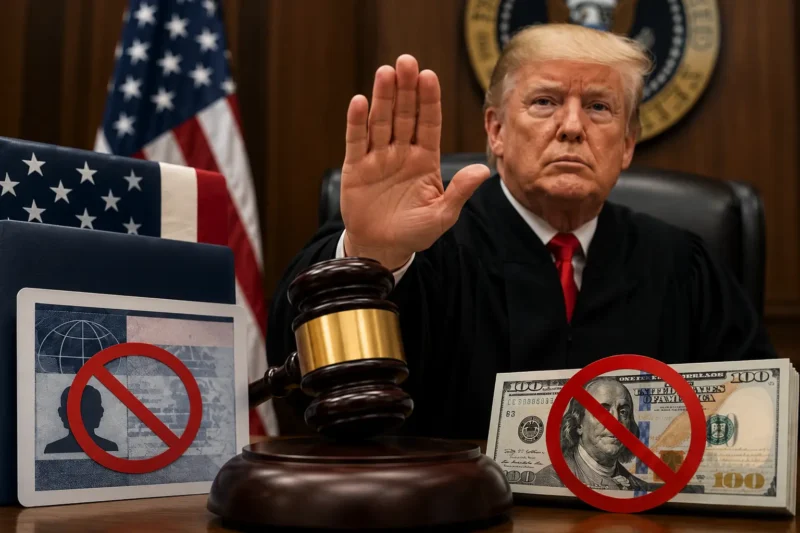
The H-1B Visa $100000 Fee Declared Illegal by US Judge — this is the headline that sent shockwaves across Silicon Valley, Bengaluru, and every Indian IT household on June 8, 2026.
In a landmark 42-page ruling, U.S. District Judge Leo T. Sorokin of Massachusetts struck down President Donald Trump’s controversial $100,000 fee imposed on new H-1B visa applications. The judge declared the fee an unlawful tax — one that only the United States Congress, not the President, has the constitutional authority to impose.
What Was the Trump’s $100000 H-1B Visa Fee?
In September 2025, President Trump signed Presidential Proclamation 10973, imposing a $100,000 supplemental fee on every new H-1B visa application. Before this, the total cost for an employer to sponsor an H-1B worker typically ranged from $2,000 to $5,000 — depending on company size and other factors.
This new fee was a 2,000% increase overnight.
The Trump administration justified the move by claiming:
- The H-1B program was being “abused” by companies to replace American workers with cheaper foreign labor.
- The steep fee would force employers to prioritize hiring US citizens.
- It would generate billions in revenue for the government.
However, the real impact was devastating — especially for Indian professionals.
Key Fact: Indian nationals account for 71% of all H-1B visa recipients annually, making them the largest beneficiary group by a wide margin. Chinese nationals are a distant second at just 12%.
Read More:- Malviya Nagar Fire Today — 21 Killed in Shocking Delhi Hotel Blaze on June 3, 2026: What We Know
The Lawsuit That Brought It Down
The fee did not go unchallenged. Three separate lawsuits were filed almost immediately:
- The US Chamber of Commerce challenged the fee in Washington, D.C.
- A coalition of unions, employers, and religious groups filed in California.
- California and 19 other Democratic states filed the most powerful lawsuit in federal court in Boston — the one that ultimately succeeded.
The 20-state coalition, led by California Attorney General Rob Bonta and Massachusetts Attorney General Andrea Campbell, argued that:
- Trump had no legal authority to impose the fee.
- The fee functioned as a tax, which only Congress can create under the US Constitution.
- It caused severe damage to hospitals, universities, and tech companies — all of which depend heavily on H-1B workers.
“Nearly 30,000 educators nationwide hold H-1B visas. The University of Massachusetts alone sponsors more than 340 H-1B faculty and researchers,” the lawsuit noted.
What Did the Judge Actually Rule?
On June 8, 2026, Judge Leo T. Sorokin issued a clear, unambiguous verdict:
- The $100,000 fee is an unauthorized tax, not a regulatory payment.
- The US Constitution gives taxing power to Congress, not the President.
- The administration’s argument that existing immigration law authorized the fee was rejected.
The judge wrote in his ruling:
“The President has no authority to levy a tax unless such power is delegated by Congress through statute.”
The ruling immediately vacated the fee — meaning it is currently blocked from being collected.
5 Ways H-1B visa fee court ruling Indian tech workers
1. Hiring Costs Drop Dramatically
Before the fee, processing an H-1B visa cost employers around $2,000–$5,000. With the $100,000 fee, many companies — especially mid-sized tech firms and startups — simply stopped sponsoring H-1B workers altogether.
With the fee struck down, tech companies can resume H-1B sponsorships without the financial burden. This is expected to trigger a surge in new H-1B applications in the second half of 2026.
2. Indian IT Talent Pipeline Reopens
The $100,000 fee had practically choked the pipeline of fresh Indian tech talent coming to the United States. As of February 2026, USCIS had received only 85 payments of the $100,000 fee — compared to the hundreds or thousands of applications it normally processes.
The court ruling reopens this pipeline. Indian professionals in software engineering, data science, AI, and healthcare — fields where demand far outpaces domestic supply — stand to benefit the most.
3. Indian Diaspora Groups Celebrate — But Stay Cautious
Major Indian diaspora organizations welcomed the ruling warmly. Khanderao Kand from the Foundation for India and Indian Diaspora Studies (FIIDS) called the decision a restoration of “predictability and fairness to the employment-based immigration system.”
However, Sanjeev Joshipura of Indiaspora struck a note of caution, warning that “the administration might still create hurdles for H-1B holders through procedural means.”
Translation: The battle is won, but the war may not be over.
4. The Government Is Appealing — This Isn’t Final Yet
Here is the part that Indian tech workers must not ignore: the Trump administration has already announced it will appeal the ruling.
This means:
- The case could go to the First Circuit Court of Appeals.
- From there, it could potentially reach the US Supreme Court.
- Until a final verdict is delivered, there is legal uncertainty around the fee.
Meanwhile, a separate Chamber of Commerce lawsuit is still being appealed — and a lower court had actually rejected the Chamber’s claims in December 2025, showing that not all judges agree.
5. H-1B Reforms Are Still Coming — Salary-Based Selection Is Next
Even if the fee is permanently struck down, the H-1B landscape is changing fast. The Trump administration has already:
- Replaced the random lottery system with a salary-based merit selection model, prioritizing higher-paid applicants.
- Enhanced vetting processes for all H-1B applicants.
- Proposed stricter definitions for “specialty occupation” roles.
This means that while the $100,000 fee may be gone, Indian tech workers should prepare for a more competitive and scrutinized application process going forward.
What Should Indian Tech Professionals Do Right Now?
If you are an Indian tech professional planning to apply for an H-1B visa or your employer is considering sponsoring you, here are some urgent steps:
- Consult an immigration attorney immediately — the legal landscape is still shifting.
- Do not assume the ruling is permanent — an appeal is already underway.
- Explore the new salary-based selection model — higher salaries now improve your chances.
- Keep an eye on Congress — new bills like the “End H-1B Visa Abuse Act of 2026” are being proposed.
- Explore parallel options — countries like Canada, Germany, and the UK are actively recruiting Indian STEM talent.
Quick Facts: H-1B Visa at a Glance (2026)
| Detail | Information |
|---|---|
| Annual H-1B Cap | 65,000 (+ 20,000 for advanced degree holders) |
| Largest Beneficiary | India — 71% of all H-1B visas |
| Previous Fee Range | $2,000 – $5,000 |
| Trump’s New Fee | $100,000 (now struck down) |
| Court Ruling Date | June 8, 2026 |
| Judge | Leo T. Sorokin, District of Massachusetts |
| Ruling | Fee declared an unlawful tax |
| Government Response | Appeal announced |
Conclusion
The H-1B $100,000 fee declared illegal by Judge Sorokin is a massive win for Indian tech professionals, US tech companies, universities, and hospitals that depend on global talent. It restores fairness to a system that had been weaponized by an executive order that bypassed congressional authority.
Read More:- 7 Shocking Facts About the Kushner Albania Luxury Coastal Project Controversy in 2026
