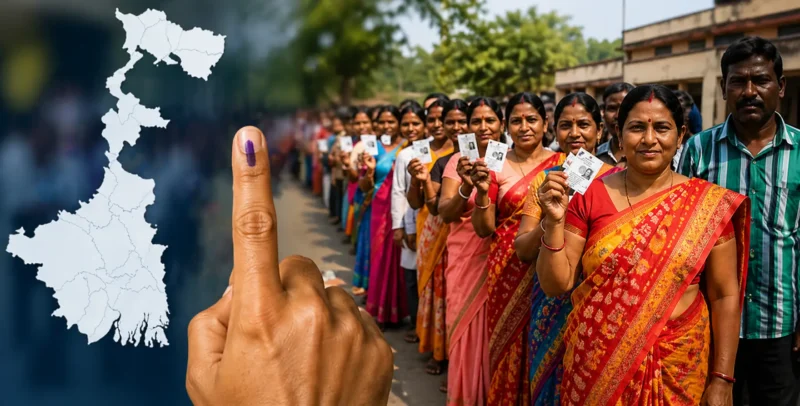
Introduction to West Bengal Election Phase 2
Elections in West Bengal take place in several stages because of reasons related to logistics and security. Phase 2 is important since it covers many sensitive constituencies that have seen fierce competition in previous elections.
Importance of Phase 2
Consists of sensitive areas
Comprises both urban and rural constituencies
Reveals voters’ early attitude
Affects future momentum
It is significant since political analysts track the developments in this phase carefully since it determines the future course of the whole election process.
Phase 2 Constituencies: A Strategic Approach
The Phase 2 constituencies are comprised of a blend of constituencies with different demography and politics.
Categories of Constituencies
- Urban Constituencies
Emphasis on infrastructure, employment, and development
High level of media coverage
Higher importance of online campaign
- Rural Constituencies
Agricultural activities and welfare schemes are dominant
High level of influence of local leadership
Dependency on government scheme
- Semi-Urban Regions
Mix of rural and urban issues
Extremely competitive and difficult
These constituencies have been termed as battlegrounds for electoral success.ounds due to close contests between major parties.
Voter Turnout: Patterns and Analysis
Among the most significant features of the second phase of West Bengal Elections is the high level of voter turnout, indicating the active involvement of citizens in the electoral process.
Main Points
High voter participation rate
High participation rate of female voters
Growing number of young first-time voters
Large queues formed in front of polling booths during early hours
Meaning of High Voter Turnout
Improved political awareness
Greater public involvement
Potential for surprising outcomes
Role of the Election Commission
The Election Commission of India plays a vital role in ensuring free, fair, and transparent elections.
Key Measures Taken
- Deployment of central security forces
- Monitoring of sensitive polling booths
- Use of Electronic Voting Machines (EVMs)
- Implementation of VVPAT systems
Additional Initiatives
- Voter awareness campaigns
- Improved polling station facilities
- Efficient complaint resolution systems
These measures ensure that the electoral process remains credible and trustworthy.
Read More:- US Iran Peace Talks 2026: Is the World Finally Moving Toward Stability?
Major Political Parties and Their Strategies
Several major political parties are competing fiercely in Phase 2.
Key Parties
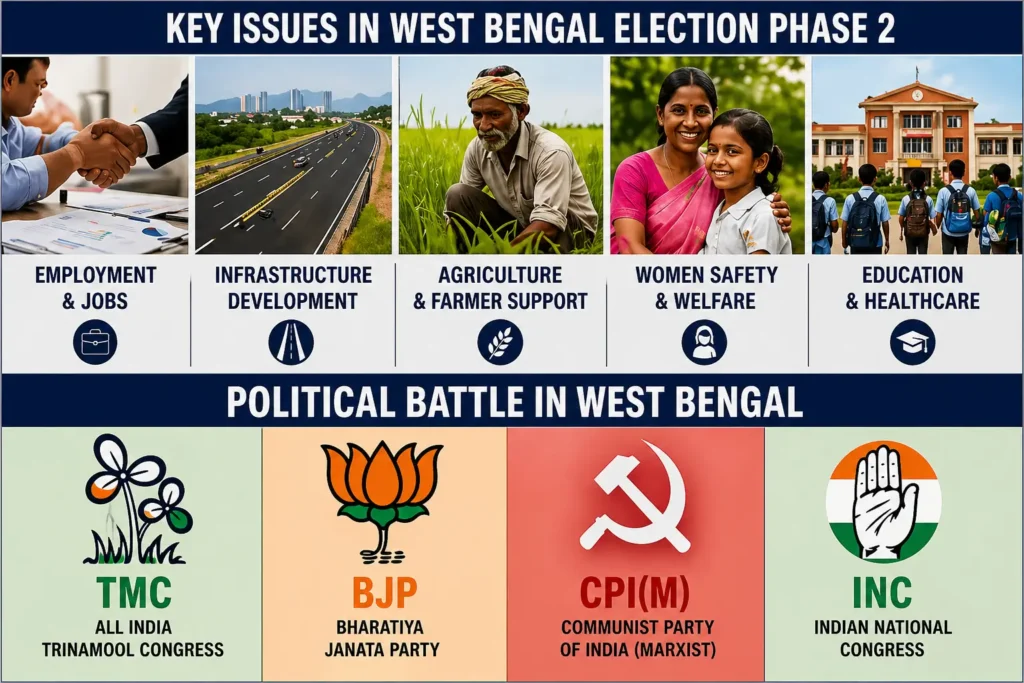
- All India Trinamool Congress (TMC)
- Bharatiya Janata Party (BJP)
- Communist Party of India (Marxist) (CPI-M)
- Indian National Congress (INC)
Campaign Strategies
1. Development-Centric Campaigns
- Focus on infrastructure and economic growth
2. Welfare-Oriented Messaging
- Highlighting government schemes and benefits
3. Localized Campaigning
- Addressing constituency-specific issues
4. Digital Outreach
- Social media campaigns and targeted ads
Each party aims to connect with voters through tailored messaging and strategic outreach.
Key Issues Influencing Voters
Understanding voter concerns is essential to analyzing election outcomes.
Major Issues in Phase 2
- Employment and job opportunities
- Infrastructure development
- Healthcare and education
- Women’s safety
- Agricultural support
Rural vs Urban Priorities
Rural Voters Focus On:
- Crop prices and subsidies
- Irrigation and farming support
- Rural employment schemes
Urban Voters Focus On:
- Job creation
- Transport and infrastructure
- Economic growth and digital opportunities
These issues significantly shape voting behavior across constituencies.
Women Voters: A Decisive Factor
Women voters have played a critical role in West Bengal Election Phase 2.
Key Trends
- Higher turnout compared to previous elections
- Increased political awareness
- Strong influence on household voting decisions
Key Concerns
- Safety and security
- Access to welfare schemes
- Healthcare and education
Political parties have increasingly focused on women-centric policies to gain support.
Youth Participation and Its Impact
Youth voters are emerging as a powerful force in shaping election outcomes.
Key Insights
- High participation from first-time voters
- Strong presence on social media
- Focus on employment and innovation
Impact on Elections
- Drives issue-based voting
- Influences campaign strategies
- Promotes digital political engagement
The youth vote is becoming a game-changer in modern elections.
Campaign Strategies in Detail
Political campaigning has evolved significantly, combining traditional and modern approaches.
Traditional Methods
- Public rallies
- Roadshows
- Door-to-door outreach
Modern Techniques
- Social media campaigns
- Digital advertising
- Data-driven targeting
Strategic Focus Areas
- Emotional connection with voters
- Cultural and regional identity
- Local issues and governance
Modern campaigns are more personalized and technology-driven than ever before.
Security Arrangements and Challenges
Ensuring safety and fairness is a top priority during elections.
Security Measures
- Deployment of central forces
- CCTV monitoring at polling booths
- Quick-response teams
Challenges Observed
- Minor technical glitches
- Long waiting times in some areas
- Political allegations
Despite these challenges, authorities ensured a largely smooth voting process.
Media and Public Influence
Media plays a crucial role in shaping public opinion during elections.
Role of Media
- Provides real-time election updates
- Highlights voter concerns
- Offers expert analysis
Social Media Influence
- Rapid spread of information
- Increased political awareness
- Risk of misinformation
Voters today rely heavily on both traditional and digital media for information.
Political Impact of Phase 2
Phase 2 has a significant impact on the overall election outcome.
Key Indicators
- High turnout suggests strong competition
- Close contests indicate uncertain results
- Regional voting patterns reveal party strengths
Broader Impact
- Influences campaign strategies in later phases
- Affects national political narratives
- Shapes future political alliances
This phase provides valuable insights into voter sentiment and political trends.
Final Thoughts
West Bengal Election Phase 2 is a great example of the power of democracy in India. Due to heavy voting, active involvement of women and youths, and keen competition between political parties, the second phase holds great significance in deciding the result of the election.
FAQs
What Is West Bengal Election Phase 2?
It is part of the multi-phase voting process taking place in West Bengal.
- Why Voter Turnout is Important?
Voter turnout shows public engagement and helps determine the outcome of the elections.
- Who Are the Contending Parties?
The contending parties are TMC, BJP, CPI-M, and Congress.
- What Are Some Issues Pertinent to Phase 2 Elections?
Some main issues include employment, development, health care, and farming.
Read More:- “Petrol & Diesel Prices Hold Steady in India — What’s Keeping the Rates Stable 2026?”
