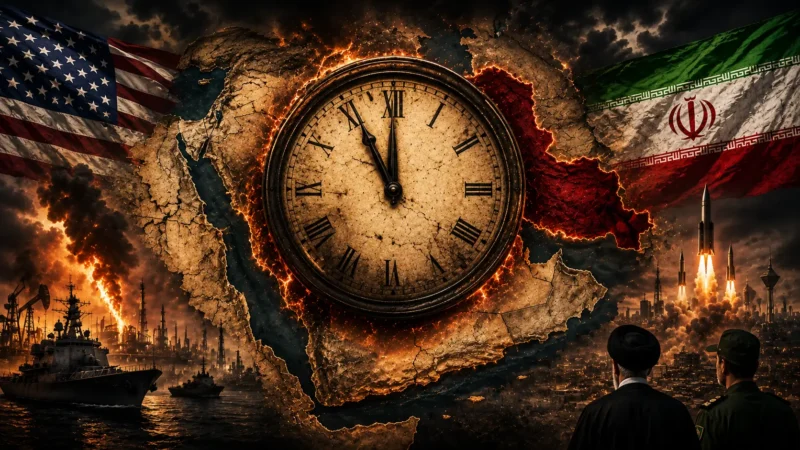
Trump Iran warning “clock is ticking”
Background: What Is Happening Between the US and Iran in 2026?
To understand the weight of Trump’s warning, here is a quick timeline of events:
- February 2026: The US and Israel launched military operations against Iran targeting its nuclear facilities
- Early April 2026: A fragile ceasefire was declared after 11 weeks of US-Iran conflict
- May 2026: Peace talks mediated by Pakistan stalled badly — the US demanded Iran completely abandon its nuclear program; Iran insisted on its right to enrichment
- May 17, 2026: Trump rejected Iran’s latest peace proposal, calling it a “piece of garbage,” and issued his “clock is ticking” warning on Truth Social
- Same day: A drone struck the UAE’s Barakah nuclear power plant, damaging an electrical generator — dramatically escalating regional tensions
This is the explosive backdrop against which Trump’s warning must be understood.
7 Alarming Reasons Trump’s Iran Warning Matters to the World
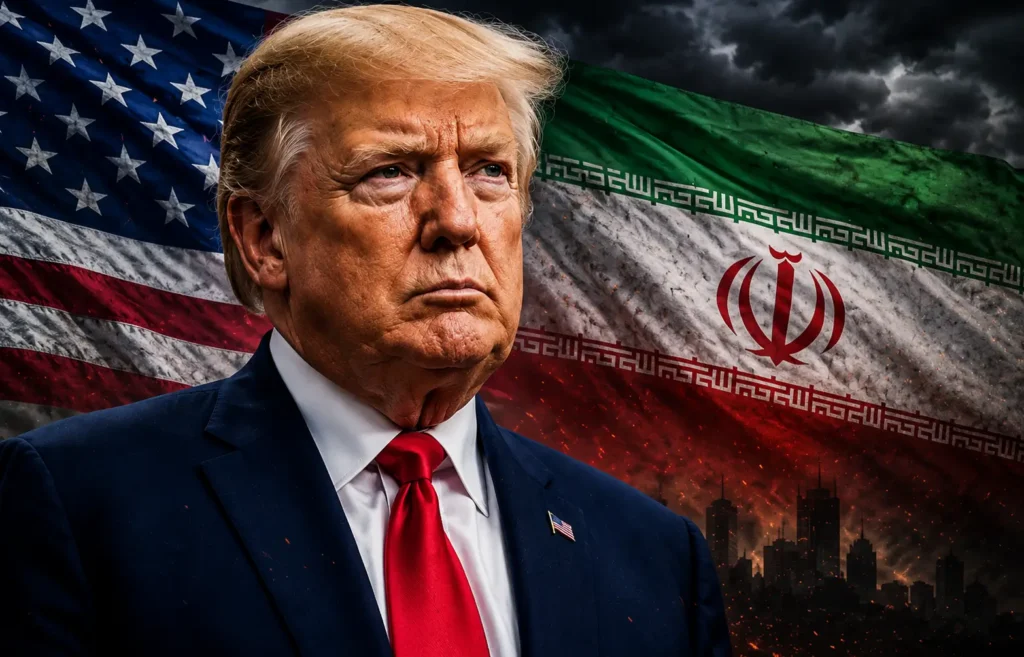
1. Military Action Could Restart at Any Moment
This is not just rhetoric. According to reports, Trump is expected to meet his senior national security team in the White House Situation Room to discuss military options against Iran. This is a formal, structured process — not a casual conversation.
The US-Iran conflict has already stretched into its 11th week. A fragile ceasefire is hanging by a thread. Regional intelligence officials have warned that Iran is deliberately pursuing a strategy of “deception and delay” — hoping to buy enough time to make any US military restart politically and operationally more complicated.
Trump’s warning is a direct signal that his patience has run out and that the military option is very much back on the table.
Read More:- Why Defence Deals Increase During PM Modi Foreign Visits: 7 Proven Secrets Revealed
2. The Strait of Hormuz — A Global Oil Chokepoint at Risk
One of the most alarming dimensions of the Trump Iran warning is what it means for the Strait of Hormuz — the narrow waterway through which approximately 20% of the world’s oil supply passes every single day.
The US and Israel have already imposed a double naval blockade in the Strait. If military action restarts, Iran could move to close or heavily disrupt this critical passage — sending global oil prices through the roof.
Countries like India, Japan, South Korea, and almost all of Europe depend heavily on oil flowing through the Strait of Hormuz. Any disruption would trigger immediate inflation, energy crises, and economic pain across the globe.
3. Iran’s Nuclear Program Is the Core Issue — And It Remains Unresolved
The heart of the Trump-Iran standoff is nuclear. Trump has been vocal about demanding a 20-year guarantee from Iran to halt all nuclear enrichment activities. Iran has flatly refused to accept this as a condition for peace talks.
Despite US and Israeli military strikes targeting Iranian nuclear facilities earlier in the US-Iran conflict, classified US intelligence assessments suggest Iran has regained access to key missile sites and launchers — meaning the nuclear threat has not been eliminated.
Trump’s “clock is ticking” warning signals that he views Iran’s stalling as a direct threat to his core objective: permanently preventing Iran from acquiring a nuclear weapon. The longer the delay, the more dangerous the situation becomes.
4. The UAE Drone Attack — A Dramatic Escalation on May 17
On the same day as Trump’s warning, a drone struck the UAE’s Barakah nuclear power plant — the Arab world’s first operational nuclear facility. While UAE officials confirmed the attack damaged an electrical generator outside the inner perimeter and stated there was no impact on radiological safety, the symbolism was unmistakable.
This was a direct attack on a nuclear facility in a Gulf state that is a key US ally. Three drones entered UAE airspace from the western border — two were intercepted, one hit its target.
This attack dramatically raised the stakes of the entire US-Iran conflict and almost certainly influenced the urgency and tone of Trump’s warning just hours later. The message from whoever launched the drone was clear — and Trump’s response made it equally clear that the US is not prepared to absorb such attacks indefinitely.
5. China Has Now Entered the Picture
Following Trump’s two-day summit with Chinese President Xi Jinping in Beijing, Trump announced a potentially significant development — that Xi Jinping has committed to withholding military equipment from Iran, and that China expressed a desire to help keep the Strait of Hormuz open.
If true, this represents a major shift. China has historically been one of Iran’s most important economic and diplomatic partners. A genuine Chinese commitment to not supply military equipment to Iran — if it holds — would significantly weaken Tehran’s strategic position.
This is why the timing of Trump’s warning, coming immediately after the Beijing summit, is no coincidence. With China’s position now clarified, Trump appears to believe he has the geopolitical space to apply maximum pressure on Iran.
6. Iran’s Economy Is Collapsing — But the Regime Is Holding On
Here is a critical piece of context that shapes everything about Iran’s current negotiating position. Iran was already severely crippled by sanctions before the war began in February. Now, after 11 weeks of military conflict and a naval blockade, early signs of a developing fuel crisis are emerging inside the country.
Yet despite this economic devastation, the Iranian regime has not collapsed and has not made meaningful concessions. In fact, Iranian state media described their latest peace proposal — the one Trump called “a piece of garbage” — as “reasonable and responsible.”
This is the fundamental problem that drives Trump’s frustration and his “clock is ticking” language. Economic pressure alone is not producing the outcome he wants. If Iran calculates it can outlast Trump politically — pointing to the upcoming World Cup and America’s 250th anniversary celebrations as events that would make restarting war uncomfortable for Trump — the regime may continue to delay.
Trump’s warning is designed to shatter that calculation.
7. Global Markets and Energy Prices Are Already Feeling the Pressure
The Trump Iran crisis is not just a Middle East story — it is a global economic story. Here is how the ongoing US-Iran conflict and this latest warning is affecting the world:
- Oil prices have been elevated due to the Strait of Hormuz naval blockade, with US domestic gas prices soaring
- Gold prices have risen as investors seek safe-haven assets during geopolitical uncertainty
- Airline stocks are under pressure globally due to fuel cost uncertainty
- Emerging market currencies — including the Indian Rupee — face depreciation pressure as oil import bills rise
- Insurance and shipping costs for vessels in the Persian Gulf have surged dramatically
If military action restarts following Trump’s “clock is ticking” warning, expect an immediate and sharp reaction across all of these markets.
What Happens Next? 2 Possible Scenarios
1: Iran Moves Quickly and Accepts a Deal
Iran returns to the negotiating table with a serious offer that addresses Trump’s core demands on nuclear enrichment. A peace deal is signed. Oil prices fall, markets stabilise, and the US-Iran conflict ends.
Likelihood: Low in the short term, given the hardened positions on both sides.
2: US Restarts Military Action Against Iran
Trump follows through on his warning. US and Israeli forces resume strikes on Iranian military and nuclear infrastructure. The Strait of Hormuz becomes a full war zone, crude oil prices spike dramatically, and the global economy faces its most serious energy shock in decades.
Likelihood: Elevated and rising — the White House Situation Room meeting on Tuesday will be a key signal to watch.
What This Means for Ordinary People Around the World
You do not need to live in Tehran or Tel Aviv for this conflict to affect your daily life. Here is the direct impact on regular people globally:
- Higher fuel and petrol prices — already happening, will worsen if war restarts
- More expensive flights — aviation fuel costs passed on to passengers
- Rising food prices — energy costs embedded in agriculture and food supply chains
- Stock market volatility — uncertainty makes markets nervous globally
- Weaker currencies — especially in oil-importing developing nations
The Trump Iran “clock is ticking” warning is not just a headline. It is a warning that your electricity bill, your grocery bill, and your travel plans could all be affected by what happens in the next few weeks.
FAQs: Trump Iran warning “clock is ticking”
Q1: What exactly did Trump say about Iran in his “clock is ticking” warning? Trump posted on Truth Social on May 17, 2026 that Iran must move fast on a peace deal or face devastating military consequences, warning there “won’t be anything left of them.”
Q2: Why did Trump issue this warning now? The warning followed the collapse of peace talks, Iran rejecting the US peace proposal, and a UAE Drone Attack on the UAE’s nuclear power plant — all happening within days of each other.
Conclusion
The Trump Iran warning “clock is ticking” issued on May 17, 2026 is far more than a social media post. It is a signal from the most powerful military force on the planet that time is running out for diplomatic solutions — and that the consequences of failure will be severe for Iran and disruptive for the entire world.
Read More:- 5 Powerful Reasons Why the Tata Sierra EV Is India’s Most Exciting Electric SUV in 2026
