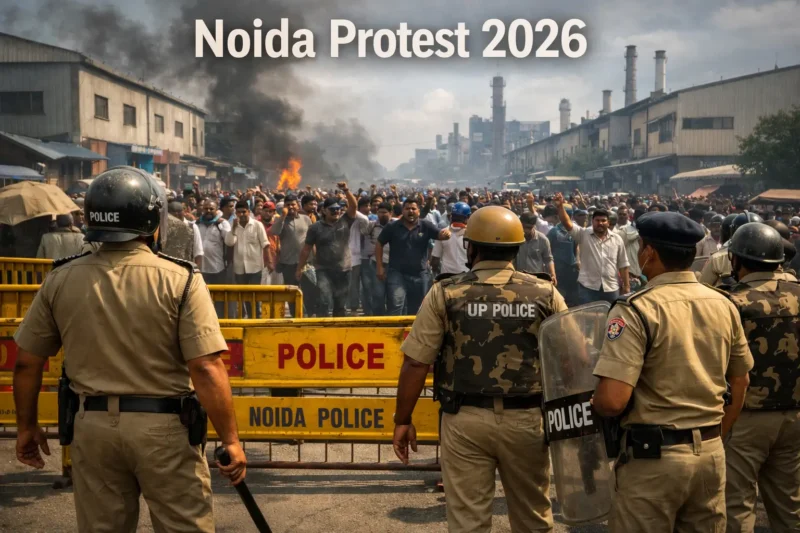
Introduction: Noida Protest 2026
The Noida Protest 2026 is one of the latest happenings that have gained popularity due to their significance throughout the nation. While what started off as a peaceful Noida protest for the workers of the industrial sector eventually turned out to be a form of unrest, creating questions regarding the issue of law and order. It is in such circumstances that the job of the administration plays an extremely important role.
The Noida Protest Background
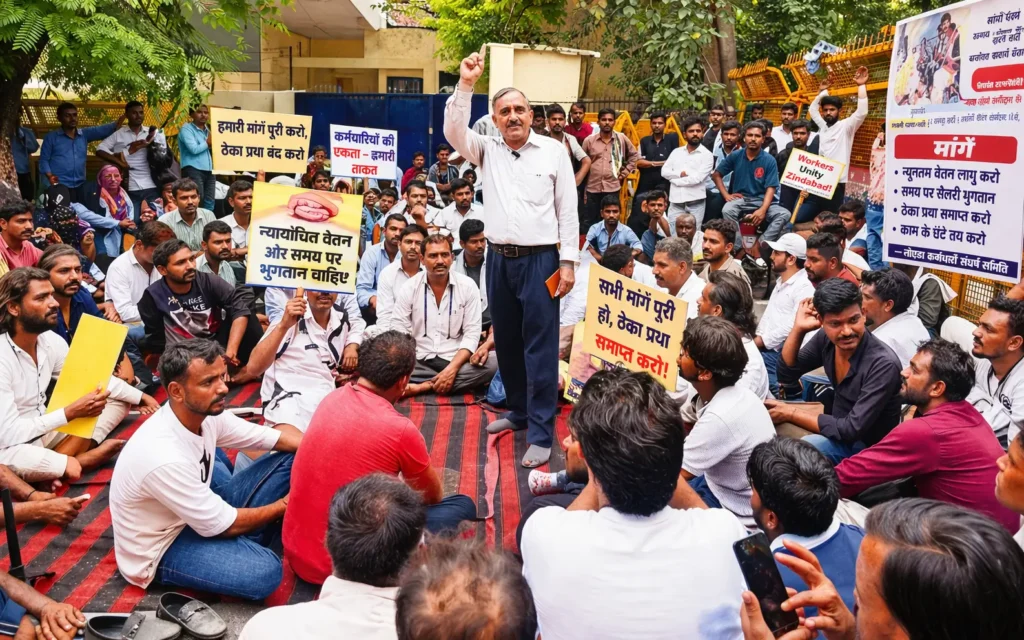
Most of the protests started in Noida’s industrial areas, where workers spoke out about a number of problems, including:
- Request for higher pay
- Conditions of work are better
- Paying salaries on time
- Bonuses and pay for overtime
Comparing pay structures with those in nearby states like Haryana
The protests grew stronger as tensions rose, causing problems in daily life and getting a lot of media coverage.
The situation is getting worse.
The protest started out peacefully, but it got tense over time because of
- A lot of workers getting together
- Roadblocks that make traffic very bad
- Throwing stones and vandalism happen
- People who live and work in the area are scared.
These developments necessitated immediate intervention from the local administration to prevent further escalation.
Administrative Measures to Maintain Law and Order
- Large Police Force Deployment
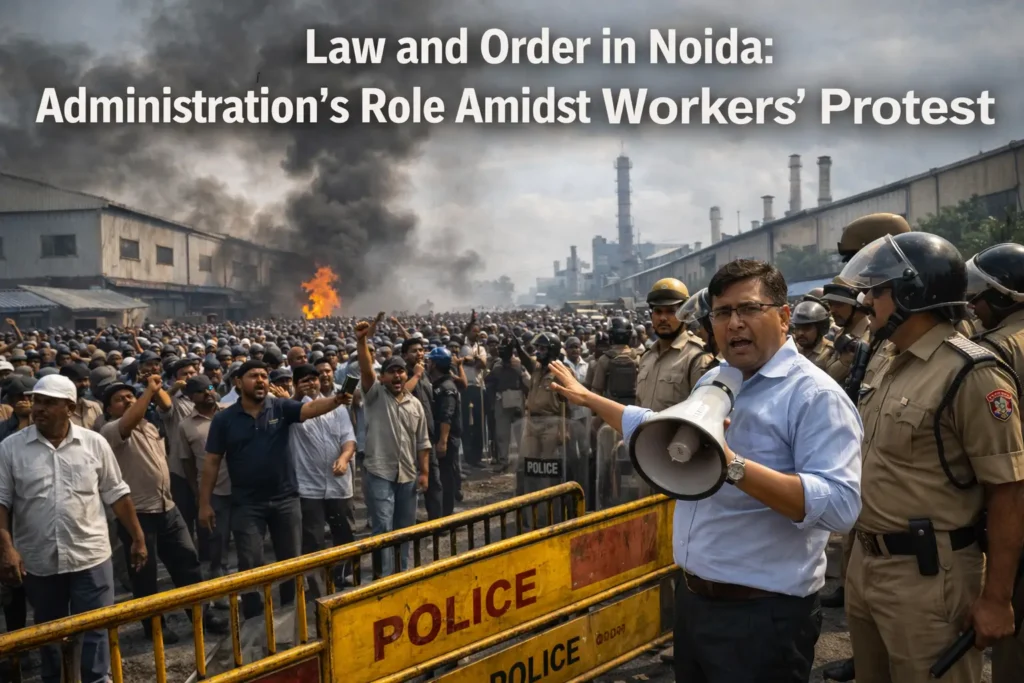
The administration utilized an effective force deployment of police personnel in critical regions. RAF and local police collaborated to break up crowds and prevent any acts of violence from taking place.
- Section 144 Implementation
Section 144 of CrPC was enacted in order to avoid any violent activities and unlawful assembly. This measure ensured that there was a proper control of crowd management.
- Efficient Traffic Arrangement for Smooth Commute
In order to prevent inconvenience to the citizens, special traffic advisories were released. Diversions and arrangements for additional traffic police in affected areas were made accordingly.
- Talks with Trade Union and Factory Authorities
Dialogue with representatives of the workers was started as a means to resolve the issue. The talks aimed at reducing tensions among laborers and their employers.
- Enhanced Response of Emergency Services
Emergency services such as ambulances and fire brigades were placed on standby. They were to be activated instantly in the event of any untoward happenings.
- Monitoring of Social Media Platforms and Public Communication
Official information concerning the crisis was disseminated through different social media platforms in order to counter any form of rumor mongering and spread panic.
Read More:- “LSG vs GT Dream11 Prediction: Best Fantasy Team, Captain, and Vice-Captain Picks”
Government Role and Policy Inferences
The state government was instrumental in ensuring the success of administrative measures by:
- Giving assurance to workers that their complaints would be handled.
- Investigating cases of wage differences.
- Fostering dialogue among various industry players.
- Stressing strict adherence to the law.
This reflected the determination of the government to take a stringent approach to economic stability and social justice.
Effect on the Community and Local Economy
- Disruption of Daily Routine
Blockades on the road and heightened security arrangements caused serious traffic congestion for office workers, students, and businesspeople.
- Economic Effects
The temporary closure of industries brought about loss of production and economic difficulties for firms.
- Threat to Community Safety
The disturbance generated an atmosphere of fear among community members, emphasizing the need for effective crisis management skills on the part of the authorities.
Challenges that the Administration Encountered
The administration faced certain difficulties despite their efforts:
- Controlling masses within highly industrialized areas
- Containing any spread of misinformation through social media
- Protecting the rights of workers while ensuring safety
- Making sure there is no interference with the economy
Lessons Learnt & Future Preventive Measures
- Improved Labour Relationships
Maintaining open channels of communication among workers, management, and governmental organizations may prevent future incidents.
- Early Warning Signals
Implementing effective grievance handling procedures may help spot and solve problems early on.
- Policy Review
Reviewing wage policies and maintaining consistent labor practices in different areas may minimize discontent.
- Community Involvement
Fostering a positive relationship between officials and citizens ensures greater cooperation in emergencies.
Conclusion: Noida Protest
From the Noida Protest 2026 case, it is clear that in times of disturbances, it is the job of the administration to ensure that law and order prevail. This was successfully achieved through the use of security, legal action, communication, and dialogue. Although some issues came out of the problem, lessons have been learned from the experience.
Read More:- PBKS vs SRH Dream11 Prediction: Captain and Vice-Captain Selections for the Best Fantasy Team
