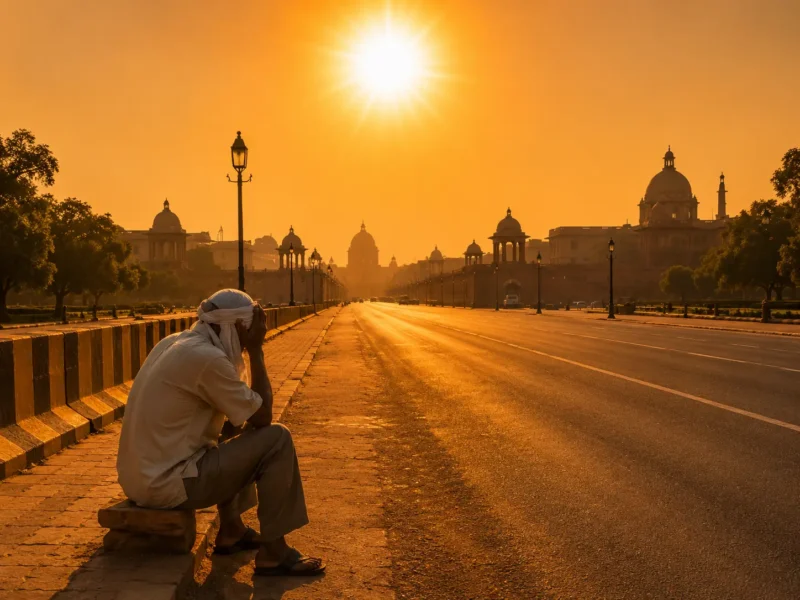
Heatwave 2026 Not Ending
If you have stepped outside this week and felt like the world is on fire, you are not imagining it. The heatwave 2026 gripping India is showing no signs of stopping — and the India Meteorological Department (IMD) has officially confirmed that no meaningful relief is expected until at least May 28, 2026.
Temperatures are hovering above 45°C across large parts of north and central India, with Maharashtra’s Brahmapuri recording the country’s highest temperature this season at a scorching 47.2°C. Schools in Ghaziabad and Noida have been shut. Hospitals are reporting a sharp rise in heatstroke cases. And millions of people are wondering the same thing — why is this heatwave not ending?
What Did IMD Say About Heatwave 2026?
The India Meteorological Department released an official press release on May 22, 2026 with a stark warning:
“Heat wave to severe heat wave conditions likely to continue to prevail over plains of northwest India, Central and East India and parts of Peninsular India during the next 6–7 days.”
Specifically, IMD has forecast:
- Heatwave to severe heatwave over Uttar Pradesh, Madhya Pradesh, Rajasthan, Maharashtra, and Andhra Pradesh till May 28
- Severe heatwave in isolated pockets of Delhi from May 24 to May 27
- Orange and Red alerts issued across multiple states
- No significant drop in maximum temperatures in northwest India before May 28
This is not a routine summer heat. IMD classifies a heatwave when the maximum temperature crosses 40°C in plains and is at least 4.5°C above normal. A severe heatwave means temperatures are 6.4°C or more above normal — and several regions right now are well beyond that threshold.
Read More:- ITR Filing 2026 Last Date — 5 Shocking Deadlines Salaried, Freelancers & Pensioners Must Know
Which States Are Most Affected by Heatwave 2026?
Here is the current state-wise heatwave situation as of May 23, 2026:
| State | Situation | Alert Level |
|---|---|---|
| Maharashtra (Vidarbha) | 47.2°C in Brahmapuri — highest in country | Red Alert |
| Uttar Pradesh | Widespread heatwave, 45°C+ in many cities | Red Alert |
| Madhya Pradesh | Severe heatwave across most districts | Red Alert |
| Rajasthan | Severe heatwave, extreme dry heat | Red Alert |
| Delhi | Hot winds, severe heatwave from May 24 | Orange Alert |
| Haryana | Heatwave persisting, schools affected | Orange Alert |
| Telangana | Heatwave conditions in multiple districts | Orange Alert |
| Andhra Pradesh | Heatwave in isolated areas | Yellow Alert |
| Chhattisgarh | Heatwave conditions reported | Orange Alert |
5 Alarming Reasons Why Heatwave 2026 Is Not Ending
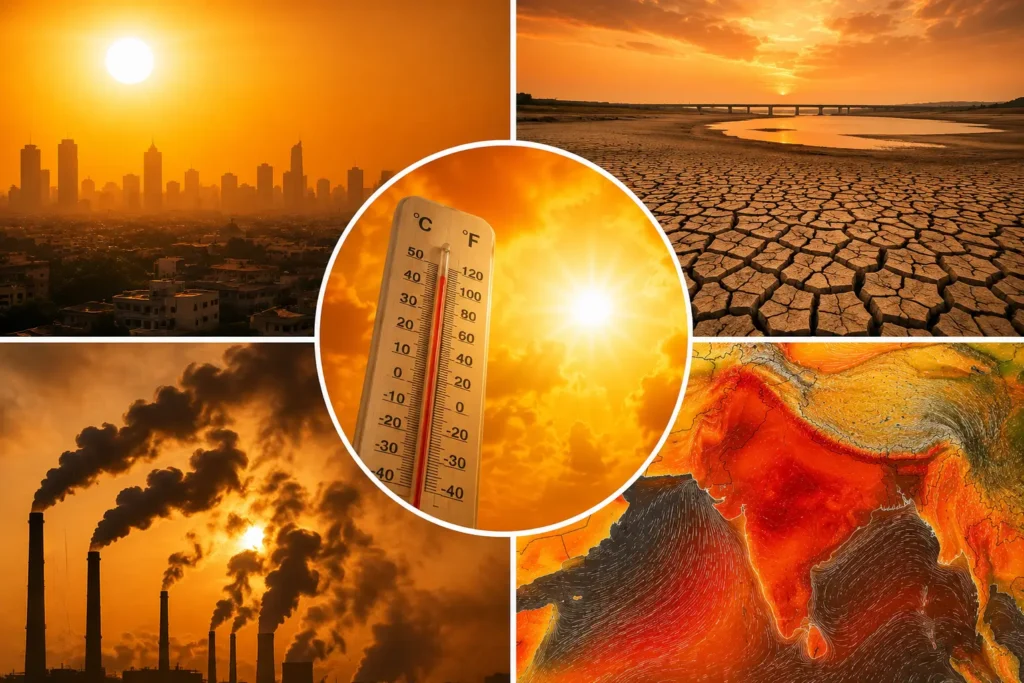
1. No Active Western Disturbance Over North India
The most important reason the heatwave 2026 is not breaking is the absence of a strong western disturbance. Western disturbances are weather systems that bring moisture and rain from the Mediterranean region into north India. When they are active, they bring cloud cover and showers that break the heat.
Right now, the western disturbance affecting the Western Himalayan region is described by IMD as “very feeble” — too weak to provide any cooling effect to the plains of Punjab, Haryana, UP, or Rajasthan.
2. Hot and Dry North-Westerly Winds Blowing Nonstop
Dry and hot north-westerly winds from the Thar Desert and Pakistan are continuously blowing across north and central India. These winds — locally known as “loo” — carry intense dry heat and significantly raise temperatures in the Indo-Gangetic plains. With no moisture-laden winds from the Bay of Bengal reaching these areas yet, there is no natural cooling mechanism in place.
3. Monsoon Still Weeks Away From North India
The southwest monsoon typically reaches Kerala in late May or early June, but it takes several more weeks to travel north. Even after the monsoon’s Kerala onset, Delhi and central India usually receive monsoon rains only in late June or early July. Until then, the blistering pre-monsoon heat in these regions has no relief in sight.
4. Climate Change Intensifying Heat Events
This is the bigger picture that scientists are increasingly pointing to. According to IMD’s seasonal outlook for April to June 2026, above-normal heatwave days are expected across east, central, northwest India and the southeast peninsula — a pattern consistent with a long-term warming trend driven by climate change. Each year, peak temperatures are being set earlier in the season and lasting longer than before.
5. Anti-Cyclonic Circulation Trapping Heat
An anti-cyclonic circulation over parts of central and northwest India is another key factor. This weather pattern causes air to sink and compress, raising surface temperatures and preventing cloud formation. With clear skies and no cloud cover, solar radiation directly heats the land surface — and once the ground heats up, it radiates that heat back into the air, keeping temperatures dangerously high even after sunset.
Impact on Daily Life — What Is Happening Across India
The heatwave 2026 is not just a weather event. It is causing serious disruption:
- Schools closed in Ghaziabad, Noida, and parts of UP and Delhi as district administrations issued emergency orders
- Heatstroke hospital admissions have risen sharply across UP, Telangana, and MP
- Power demand has spiked dramatically as households and offices run air conditioners and coolers for longer hours — leading to load shedding in several districts
- Outdoor workers — construction workers, farmers, street vendors, delivery personnel — are among the most severely impacted, with no cooling options available during working hours
- Water scarcity is worsening in several cities as groundwater tables drop and pipelines struggle to meet increased demand
How to Stay Safe During Heatwave 2026 — IMD Safety Guidelines
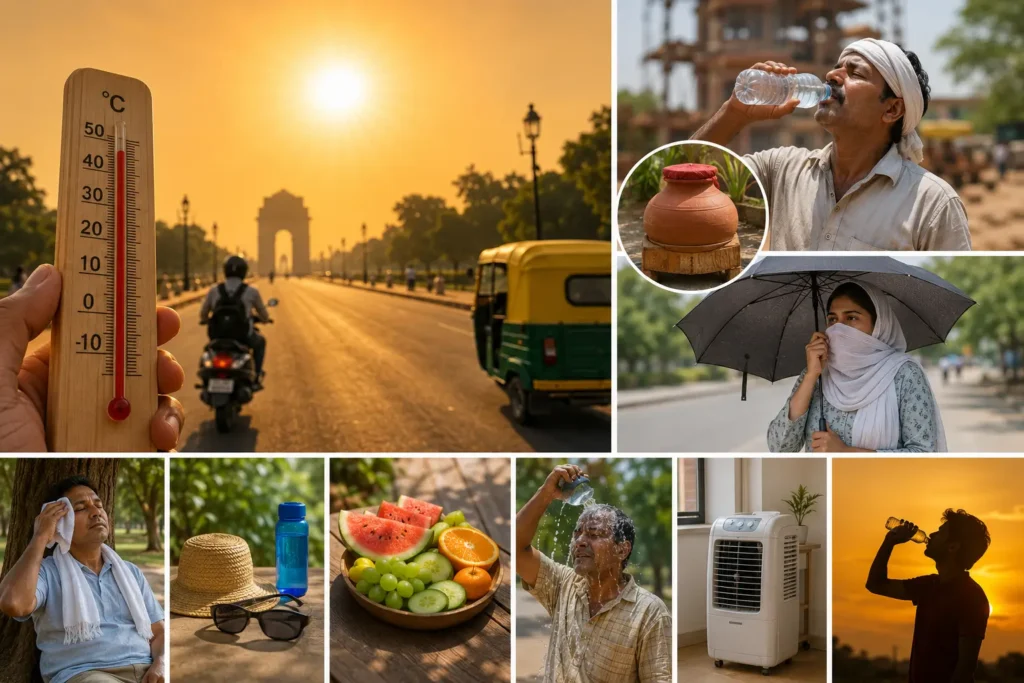
IMD has issued official guidelines for citizens. Here is what you must follow right now:
Avoid these:
- Going outdoors between 11 AM and 4 PM — this is peak heat danger time
- Wearing dark-coloured or tight synthetic clothing
- Leaving children or elderly persons in parked vehicles
- Drinking alcohol, tea, or coffee during extreme heat — they dehydrate you faster
Do these:
- Drink water every 30 minutes even if you do not feel thirsty
- Wear loose, light-coloured cotton clothing
- Apply sunscreen with SPF 30+ if stepping outside
- Use ORS (Oral Rehydration Solution) if sweating heavily
- Keep your home ventilated — use wet curtains or khus mats in windows
- Check on elderly neighbours and family members daily
Heatstroke warning signs — act immediately if you see:
- Body temperature above 104°F (40°C)
- Confusion, slurred speech, or unconsciousness
- Dry, hot skin with no sweating
- Rapid, strong pulse
If someone shows these signs, move them to shade immediately, pour cool water on their body, and call 108 (ambulance) without delay.
When Will Heatwave 2026 End? IMD Forecast
According to IMD’s extended range forecast covering May 21 to June 3, 2026:
- May 23–28: Severe heatwave continues across UP, MP, Rajasthan, Maharashtra, and Delhi
- After May 28: Some gradual reduction possible in isolated areas as a weak western disturbance approaches
- Early June: Pre-monsoon thunderstorm activity may provide partial relief in central India
- Monsoon onset in Kerala: Expected around June 1, 2026 — but relief for north India comes weeks later
The hard truth is that for most of north and central India, the real relief will only come with the monsoon in late June 2026.
FAQ
Q: Why is the heatwave 2026 so severe compared to previous years? The combination of absent western disturbances, hot dry northwesterly winds, anti-cyclonic circulation, and the long-term effects of climate change have created an unusually intense and prolonged heat event this year.
Q: Which city recorded the highest temperature in India in May 2026? Brahmapuri in Maharashtra’s Vidarbha region recorded the highest temperature at 47.2°C on May 22, 2026, according to IMD data.
Q: Is Delhi under a heatwave alert in May 2026? Yes. While Delhi had some temporary relief from dust storms and brief rain on May 23, IMD has forecast severe heatwave conditions in Delhi from May 24 to May 27, 2026.
Final Thoughts
The heatwave 2026 is not ending anytime soon — that is the clear and urgent message from IMD. With no relief expected till May 28 and the monsoon still weeks away from reaching north India, every household needs to take this heat seriously.
The biggest risk is not just discomfort — it is life-threatening heatstroke, dehydration, and heat exhaustion, especially for children, the elderly, and outdoor workers. Follow IMD’s safety guidelines, stay indoors during peak hours, hydrate constantly, and keep an eye on those around you.
Nature will bring the monsoon when it comes. Until then, stay cool, stay safe, and stay informed.
Read More:- Drishyam 3 Full Cast 2026 — Every Brilliant Character & Role Revealed
