Introduction: West Bengal 2026 Election Results Countdown
The political landscape of West Bengal is on the edge of its seat. With over 92.93% voter turnout—the highest in the state’s history—West Bengal’s 2026 assembly elections have set the stage for one of the most electrifying result days India has witnessed in recent times.
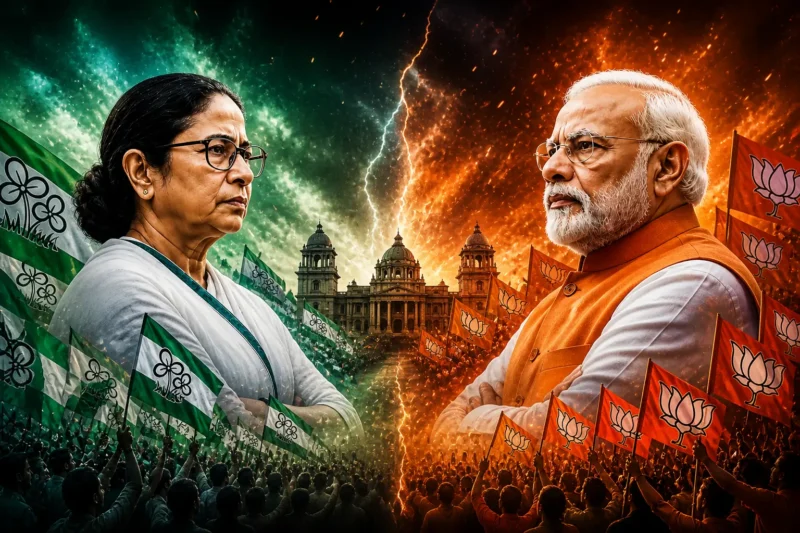
On May 4, 2026, the fate of 294 assembly seats will be decided, and with it, the future of one of India’s most politically vibrant states. This countdown has become more than just an electoral exercise; it’s a battle between two contrasting visions for West Bengal’s future: Mamata Banerjee’s regional pride versus the BJP’s nationalist agenda.
As a political enthusiast and someone who has covered Indian elections for years, I can confidently say that this election is a microcosm of India’s broader political evolution. Let me break down what makes this election so crucial and what we can expect on the counting day.
Understanding the 2026 West Bengal Election Context
What Makes This Election Different from 2021?
In 2021, Mamata Banerjee’s Trinamool Congress (TMC) secured a dominant victory with 215 out of 294 seats. The anti-CAA campaign and her strong stance against communal polarization resonated with voters across all sections.
However, 2026 is a different ballgame.
After 15 years in power, Mamata’s government faces unprecedented challenges:
- Anti-incumbency sentiment is palpable across the state
- Youth unemployment remains a critical issue
- Women’s safety concerns have damaged the government’s credibility
- Governance issues and allegations of administrative inertness
- Internal party discord within TMC has become visible
Meanwhile, the BJP has strengthened its organizational base significantly since 2021, investing heavily in grassroots mobilization and fielding candidates with stronger local connections.
The Historic Voter Turnout: What It Tells Us
The 92.93% voter turnout surpassing the 2011 benchmark is extraordinarily significant. High voter turnout typically indicates:
- Engaged and conscious electorate
- Voter eagerness to bring about change or maintain continuity
- Reduced absenteeism and increased democratic participation
This exceptional turnout suggests that West Bengali voters are highly motivated, making the election results less predictable and opening doors for potential surprises on counting day.
Read More:- Maharashtra Board Class 12 Result 2026: Complete Guide to Check Marks & Merit List
The Main Players: Mamata vs BJP – A Tale of Two Visions

Mamata Banerjee’s TMC: The Regional Powerhouse
Mamata Banerjee, often called the “Iron Lady of Bengal,” has been the face of regional politics in West Bengal. Her governance model emphasizes:
- Regional identity and pride
- Anti-communal politics and social inclusivity
- Welfare schemes for marginalized communities
- Opposition to “national” agendas that might supersede regional interests
However, her second term has been clouded by:
- Corruption allegations within her cabinet
- Administrative lethargy in addressing public grievances
- Violence and unrest in certain parts of the state
- Governance challenges in implementing welfare schemes effectively
The BJP: The Rising National Force
The Bharatiya Janata Party (BJP) has emerged as a formidable challenger in West Bengal. The party’s strategy includes:
- Nationalist messaging and emphasis on “Bharatiya” identity
- Aggressive digital campaigns and social media presence
- Focus on women’s safety and law enforcement
- Development-centric approach with emphasis on industrial growth
- Strong organizational machinery in grassroots politics
The BJP’s performance in 2021 (when it won 77 seats) provided a foundation for a stronger push in 2026.
Critical Constituencies to Watch on May 4
Understanding key constituencies is crucial for predicting election outcomes. Here are the constituencies that will likely determine the election’s final result:
South Bengal Power Centers
Diamond Harbour & Magrahat Paschim
- Re-polling took place on May 3 due to irregularities
- Traditionally TMC stronghold
- Result here will indicate whether TMC can hold its urban base
South Kolkata Constituencies
- The educated, middle-class bastion
- Historically TMC territory
- Any swing here would signal significant voter mood shift
North Bengal Strategic Zones
Darjeeling & Surroundings
- Traditional BJP stronghold
- Gorkha identity politics play a crucial role
- Key indicator of BJP’s consolidation
Malda & Murshidabad
- Significant Muslim population concentration
- Communal polarization has been high
- Will determine whether communal issues favor BJP or TMC
Central Bengal Industrial Belts
Howrah & Hooghly
- Working-class populations
- Witnessed localized violence during voting
- Union politics and labor welfare become crucial here
The Electoral Roll Controversy: A Shadow Over the Election
One of the most contentious issues in this election has been the Special Intensive Revision (SIR) of electoral rolls.
By The Numbers:
- 9.1 million voters removed from electoral rolls
- Represents approximately 12% of the electorate
- Removal categorized as: dead voters (60%), absentee voters, and disputed entries
The Debate:
Election Commission’s Perspective:
- Removal of “bogus entries”
- Elimination of duplicate registrations
- Cleanup of illegally registered voters (particularly undocumented migrants)
Opposition’s Stance:
- Disenfranchisement of genuine voters
- Discriminatory targeting of minority communities (65% of disputed entries were Muslims)
- Suppression of legitimate voting rights
This controversy adds a layer of complexity to result interpretation, as questions about electoral fairness may overshadow the victory margins.
Exit Polls and Predictions: What the Data Shows
Exit Poll Predictions (As of May 3, 2026):
| Poll | TMC Seats | BJP Seats | Others | Prediction |
|---|---|---|---|---|
| Poll A | 130-150 | 125-145 | 19-34 | Too Close |
| Poll B | 115-135 | 140-160 | 19-39 | BJP Edge |
| Poll C | 140-155 | 120-135 | 19-34 | TMC Edge |
| Betting Markets | 140-150 | 130-145 | 19-24 | Tight Race |
Important Note: Exit polls have a history of being inaccurate in West Bengal elections. The actual results often surprise observers.
What’s Actually at Stake in This Election?
For West Bengal’s Governance
The election will determine the state’s development trajectory, governance priorities, and policy focus for the next five years. Will it emphasize welfare populism (TMC) or business-friendly policies (BJP)?
For National Politics
A significant BJP performance in West Bengal would signal the party’s continued expansion into traditionally non-saffron regions. A TMC victory would demonstrate regional parties’ resilience against national waves.
For Opposition Politics
TMC, under Mamata’s leadership, has been a key voice in India’s opposition politics. Electoral performance directly impacts its national political relevance.
For Communal Harmony
The results will indicate whether voters prioritize inclusive politics over polarizing narratives—a crucial question for India’s secular fabric.
Key Factors That Will Influence the Counting
1. Women Voters’ Preference
Women constitute a significant voting bloc. Safety concerns might favor a party perceived as strong on law enforcement.
2. Youth Employment
Unemployment among youth (18-35 years) remains high. Whichever party can convince them of better job prospects will gain their votes.
3. Urban vs. Rural Divide
Urban areas have traditionally voted for TMC, while rural regions show more variability. The gap between urban and rural voting patterns will be revealing.
4. Communal Polarization Impact
The level to which communal issues have mobilized voters will directly impact results, particularly in regions with significant minority populations.
5. Local Issues vs. National Narrative
Whether voters prioritize local governance issues or national political narratives will significantly influence outcomes.
Conclusion: The Countdown to May 4
As we approach May 4, 2026—India’s election results day for West Bengal—the tension is palpable. This is more than a state election; it’s a referendum on governance, development models, and India’s political direction.
Will Mamata’s regional pride model prevail, or will the BJP’s national integration narrative succeed? Will anti-incumbency overcome incumbency advantage, or will governance delivery speak louder than opposition promises?
Mark your calendars. Set your reminders. May 4, 2026, will be a day that defines West Bengal’s future—and perhaps, India’s political trajectory for years to come.
FAQs About West Bengal 2026 Election
Q: When are the results being declared? A: May 4, 2026
Q: Why was re-polling held on May 3? A: To address irregularities reported in Diamond Harbour and Magrahat Paschim constituencies.
Q: What was the voter turnout? A: A historic 92.93%, the highest in West Bengal’s electoral history.
Q: How many seats are in the West Bengal Assembly? A: 294 seats
Read More:- Maharashtra Board Class 12 Result 2026: Complete Guide to Check Marks & Merit List
