RBI Policy 2026 Summary
The Reserve Bank of India has retained the repo rate at 5.25% under the RBI Policy 2026. It is still very focused on keeping the currency stable. The RBI is being careful because rising global crude oil prices could cause inflation. Because of this, borrowers would not get any immediate respite in their EMIs. Also, the interest rates on savings accounts and fixed deposits (FDs) stay the same. In general, the RBI wants to keep inflation in check while also keeping the economy stable.
Introduction: RBI Policy 2026
Reserve Bank of India (RBI), yet again, is in the spotlight in the month of April 2026, when its Monetary Policy Committee met to discuss and determine the fate of interest rates and the management of inflation and liquidity in the country. It is not only an economic issue but directly concerns EMI payments by millions of borrowers and the returns on investments made.
The April 2026 Monetary Policy decision assumes significance because crude oil prices around the world are climbing, creating inflationary pressures with the ongoing tensions in West Asia, while Indians are curious to know whether their EMI payments will increase or remain same.
RBI Monetary Policy
The RBI’s monetary policy is essentially a roadmap for India’s financial health. Conducted every two months, the MPC meeting decides:
- Repo Rate (the rate at which RBI lends to banks)
- Reverse Repo Rate (the rate at which RBI borrows from banks)
- Cash Reserve Ratio (CRR) and Statutory Liquidity Ratio (SLR)
These tools help RBI control inflation, stabilize the rupee, and ensure economic growth.
Repo Rate – Explained Simply
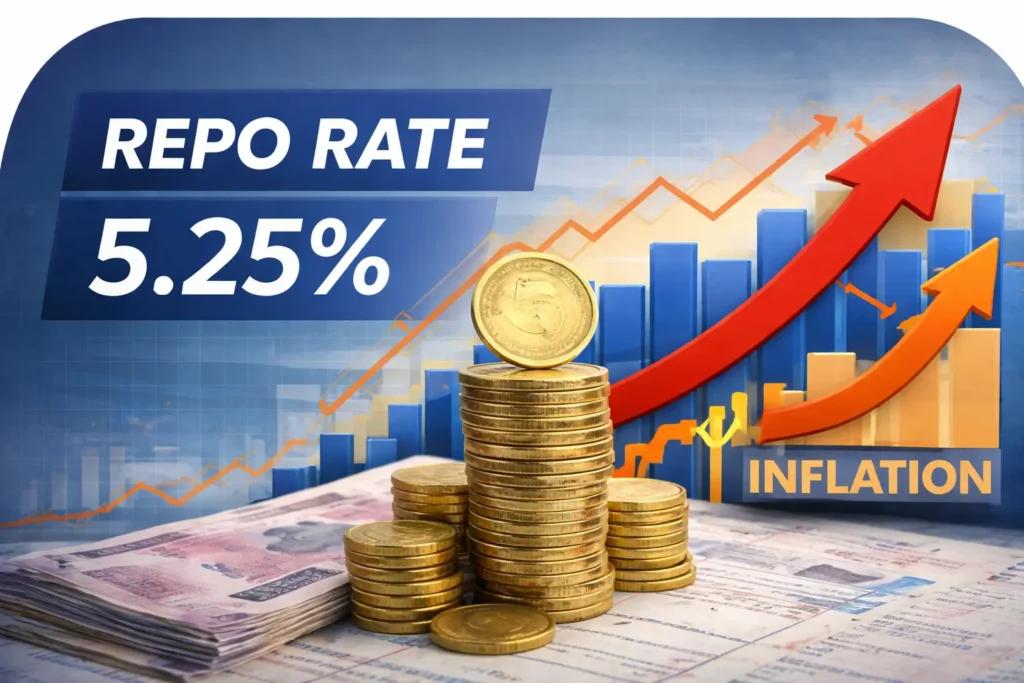
Repo Rate in Simple Language
The repo rate is the interest rate at which the Reserve Bank of India lends money to banks. We can think of the repo rate as the base cost of money, in Indias economy. The repo rate is very important because it affects the repo rate at which commercial banks borrow money from the Reserve Bank of India.
Effect of Repo Rate on Banks and Loans
- Higher Repo Rate: Banks borrow at higher cost → loans become expensive → EMIs rise.
- Lower Repo Rate: Banks borrow at lower cost → loans become cheaper → EMIs fall.
RBI Policy 2026 – Latest Updates
Latest Repo Rate Update
In April 2026, RBI decided to keep the repo rate unchanged at 5.25%. This means no immediate change in EMIs for home, personal, or auto loans.
RBI’s Important Announcements
- Focus on rupee stability amid global volatility.
- Monitoring inflation risks due to crude oil prices.
- Continued support for infrastructure and digital growth.
Read More:- Silver Boom 2026: Will Silver Become the Next Gold?
EMI Increase or Decrease – What Borrowers Should Expect
Repo Rate Hike – Impact on EMI
If RBI hikes the repo rate later in 2026:
- Home loan EMIs will rise.
- Personal and auto loans will become costlier.
- Borrowers will feel the pinch of higher monthly installments.
Repo Rate Cut – Impact on EMI
If RBI cuts the repo rate:
- EMIs will decrease, giving relief to borrowers.
- Loan affordability will improve.
- Demand for housing and consumer loans may rise.
Impact on Home Loans

Floating vs Fixed Interest Rate
- Floating Rate Loans: Directly linked to repo rate → EMIs change when RBI changes rates.
- Fixed Rate Loans: EMIs remain constant regardless of repo rate changes.
New Loan vs Existing Loan Impact
- New Borrowers: Loan affordability depends on current repo rate.
- Existing Borrowers: EMI changes only when banks reset floating rates.
Personal Loans and Credit Cards
Interest Rate Changes
Personal loans and credit card interest rates are indirectly linked to repo rate. With rates unchanged, borrowers will not see immediate changes.
Tips for Borrowers
- Avoid unnecessary borrowing during uncertain times.
- Consider prepayment if you expect future rate hikes.
- Compare lenders before taking new loans.
FD and Savings Account Impact
FD Interest Rate Update
Banks may adjust FD rates depending on RBI’s stance. With repo rate unchanged, FD returns remain stable.
Savings Account Return Changes
Savings account interest rates are unlikely to change immediately.
Inflation and RBI Policy
How Inflation is Controlled
By adjusting repo rate, RBI controls borrowing and spending, which helps manage inflation.
Direct Impact on Common Man
- Higher repo rate → costlier loans, reduced spending.
- Lower repo rate → cheaper loans, more spending power.
FAQ
Best Time to Take a Loan
With repo rate stable, this is a good time to lock in loans before any future hikes.
Investment Strategy After RBI Policy
Diversify investments between FDs, bonds, and equities to balance risk.
Future Outlook
The RBI Policy 2026 affects every Indians money choices whether you are getting a loan paying EMIs or thinking about savings and investments. The Reserve Bank of Indias decisions on repo rates decide if loans get cheaper or costlier. When the repo rate goes up EMIs and interest rates also go up adding financial stress on borrowers. A higher repo rate can also mean returns on fixed deposits and savings accounts which is good news, for investors.
The main aim of this policy is to keep inflation under control and economic growth steady. That’s why RBI sometimes increases rates and sometimes decreases them, based on market conditions. For a person the key is to plan finances wisely. If you are thinking of taking a loan it is crucial to know interest rate trends. Existing borrowers need to handle their EMIs and household budgets while investors should look for safe and stable options to safeguard their money.
Read More:- Donald Trump NCAA Reform 2026: Important Modifications, NIL Regulations, and Effect on College Sports
